
The Ongoing Impact of Covid Lockdowns on Children with Down Syndrome: new report
A new report from University College London has just been published, examining the effects of Covid lockdowns on young children with Trisomy 21. Children with Down Syndrome in Lockdown: Key findings from a survey of parents of children under 11 with Down Syndrome in the UK
It’s clear that deeply challenging consequences were set in motion by the pandemic lockdowns, and this negative course has not yet been corrected. This report comes at a key time while the draft statutory guidance for the Down Syndrome Act is still currently under consultation. Meeting the need for integrated provision of services is an aim directly addressed by the Down Syndrome Act: this report is a perfect example of why this matters, and a particularly acute instance of ways that children with Down syndrome are affected when services are fragmented or suspended.
Report Findings: interconnected impacts on wellbeing
The report presents findings from a UK survey of 241 parents of children aged 0–11 with
Down syndrome, examining the impact of COVID-19 lockdowns on education, health, development, and family life. Families reported widespread disruption, with interconnected effects across multiple areas of children’s wellbeing.
Education was heavily affected. Although most children attended school pre-pandemic, 91% stopped in-person attendance during the first lockdown, and fewer than half attended during the second. Remote learning was often ineffective: many children struggled to engage online, only about half received remote provision, and parents frequently had to manage learning themselves. Most parents believed their children missed key learning activities and worried about long-term academic regression. Extracurricular activities also largely stopped.
Social and communication development declined for many children. Nearly 60% of parents reported deterioration in social skills, and over half noted changes in communication ability, often attributed to reduced social contact and limited therapy support. Some children became more anxious or cautious around others.
Mental health and behaviour showed notable deterioration. About two-thirds of parents reported negative emotional impacts, with increases in unhappiness, anxiety, tantrums, defiance, and aggression. Isolation, disrupted routines, and fear related to COVID-19 were key contributors.
Daily life impacts were mixed but meaningful. Sleep patterns were mostly stable, but over half of children experienced reduced physical activity. Diet changes were variable, with some increases in sugary and processed foods. Many families faced financial strain, employment changes, and increased caregiving pressures.
Health services and support access were significantly disrupted. Around 90% experienced cancelled or delayed medical appointments, and many therapy services stopped or moved online. Parents feared these gaps contributed to stagnation or regression in development.
The report concludes that children with Down syndrome experienced substantial, interconnected harms during lockdowns. It calls for integrated, family-centred support, targeted educational catch-up, improved access to services, and further research into long-term impacts.
Recommendations included these observations: “… investing in early intervention and preventative initiatives can prevent future health and wellbeing challenges across the life course. Making sure that support is sufficiently available across health, education and development could not only improve quality of life of people with DS in the short term, but could have lifelong individual, societal and economic benefits, including the reduction in future demand for health and support services. As part of the government’s reassessment of how their policies can be more disability-inclusive, we suggest that working with families to develop and invest in tailored, evidence-based and sustainable solutions that acknowledge the impacts of the pandemic could help to mitigate any damage caused by the lack of support families experienced.”
The report’s findings will be of great importance in finding the best way forward for some of the young people who still remain worst affected by the pandemic. We also hope that its findings will shed light on why we have campaigned so hard for the Down Syndrome Act 2022 and for effective guidance. We hope to see a fractured system being looked at more holistically, for the sake of the DS community who are often harmed in a lasting way by the omissions and gaps they encounter. With thanks to the team at UCL for their insightful attention to the impact of the lockdowns on young children in the DS community.
International Workshop (Potenza, Italy)
Therapeutic Perspectives for Intellectual Disability in Down Syndrome
Date: Saturday 18 April 2026
Location: Auditorium, Ospedale Regionale San Carlo, Potenza (Italy)
Under the patronage of: Regione Basilicata
Organised by: AIPD Potenza and the Italian T21 Task Force
DSRF-UK is pleased to share details of an international one-day workshop bringing together clinicians, researchers, and families to discuss emerging therapeutic approaches to intellectual disability in Down syndrome. The programme spans disease mechanisms, translational science, and clinical trials, and ends with an interactive public roundtable designed to connect the science with the lived experience of families. (The organisers are also offering online participation—registration details below.)
Provisional programme (18 April 2026)
Morning — Institutional opening & Scientific Session 1
08:30 Registration
09:00 Welcome and institutional greetings
09:30–13:00 Morning scientific session
Chairs: Filippo Caraci (Catania), Vittoria Infantino (Potenza), Angelo Carfi (Rome)
09:30–10:15 — Laura Cancedda (Genoa, Italy)
Restoring neuronal chloride homeostasis to treat brain disorders.
10:15–11:00 — Rafael de la Torre (Barcelona, Spain)
AEF0217 and endocannabinoid receptor modulation: translating synaptic mechanisms into cognitive benefits in Down syndrome.
11:00–11:30 Coffee break
11:30–12:15 — Joaquin M. Espinosa (Aurora, USA)
Clinical trials for immune modulation in Down syndrome.
12:15–13:00 General discussion & Q&A
13:00–14:00 Light lunch
Afternoon — Scientific Session 2 & Roundtable
14:00–17:30 Afternoon session
Chairs: Eugenio Barone (Rome), Antonella Izzo (Naples), Emanuela Abiusi (Rome)
14:00–14:45 — Laurent Meijer (Roscoff, France)
Phase 1 clinical trial of Leucettinib-21 (a DYRK1A kinase inhibitor) targeting Down syndrome, Alzheimer’s disease, and Parkinson’s disease.
14:45–15:30 — Nelly Pitteloud (Lausanne, Switzerland)
GnRH as a potential therapy for Down syndrome.
15:30–15:45 Coffee break
15:45–16:30 — Isabel Barroeta (Barcelona, Spain)
Clinical trials for Alzheimer’s disease in Down syndrome: progress, challenges, and perspectives.
16:30–17:30 Interactive roundtable with public, speakers & families
Open dialogue between science and community.
17:30 Closing remarks
A few speaker highlights (what they’ll be covering)
- Translational neuroscience (Laura Cancedda): focusing on how neuronal “balance” mechanisms (like chloride homeostasis) may be relevant to brain function and treatable pathways.
- Synapses and signalling targets (Rafael de la Torre): presenting work on endocannabinoid receptor modulation and how synaptic insights might translate into measurable cognitive benefit.
- Immune modulation and trials (Joaquin M. Espinosa): looking at immune pathways in people with Down syndrome and what it takes to run rigorous clinical trials in this space.
- Targeting DYRK1A (Laurent Meijer): an update on early-stage (Phase 1) clinical evaluation of a DYRK1A inhibitor—an area of strong interest because DYRK1A is implicated in issues faced by people with Down syndrome.
- Hormonal pathways (Nelly Pitteloud): discussing GnRH as a potential therapeutic avenue and what the evidence is pointing to.
- Down syndrome and Alzheimer’s trials (Isabel Barroeta): a practical overview of where the field is now, what’s hard about trials in this population, and what’s coming next.
Registration (and online access details)
The flyer directs registration via the link below (the organisers can share participation/online-connection details after sign-up):
Register here

Downs Syndrome Awareness Month 2025
This Downs Syndrome Awareness Month, we’ve spoken with some of our collaborators and patrons, and would like to shine the spotlight on their work and focus areas.
For a whole year since last Down Syndrome Awareness Month, the Downs Syndrome Research Foundation UK has been advocating strongly against the Assisted Dying Bill. If this Bill succeeds, it’s likely to bring about a fundamental change in the UK healthcare system, with negative impact for the Downs syndrome community. It has been important to address these concerns with the urgency this requires.
The good news is that no matter the concern, there are often far better alternatives available for people with Downs syndrome. Awareness of alternative options matters. The roads marked out on our map will influence the destination we are likely to arrive at.
We believe there are usually better choices to support healthy lives and appropriate care for people with Down syndrome than most people are conscious of. Even healthcare professionals often lack information about the most recent research and fresh possibilities for treatments and interventions. It’s part of our mission to put those pathways on the map and make sure people know about them.
This Downs Syndrome Awareness Month, we continue to spread awareness of two facts: first, that the human rights of people with Downs syndrome need to be protected; and second, that there are excellent further steps we can take to support every individual with Trisomy 21 to thrive and fulfil their potential.
In the Downs syndrome community, self-advocates, researchers, health professionals and carers are expressing what they think is really needed in the NHS and in UK healthcare at this time. It’s not the introduction of an Assisted Dying Bill.
Until the end of October, we’ll highlight some areas where better research and better interventions bring support and hope, and pave the way towards a full, healthy, and happy life for people with Down syndrome.
Legacy Giving: ‘Remember a Charity’ Week is 8th to 14th September 2025
This week, we’ll be putting legacy giving in the spotlight. ‘Remember A Charity’ Week is a great opportunity to think about the charitable work you support, and the causes you want others to know more about.
We would love if you would consider supporting the Down’s Syndrome Research Foundation UK, as gifts like this make a huge difference to the Foundation and allow us to continue our work.
For ideas on practical steps you can take, we have put together some information that you may find helpful. Another great resource, giving answers to Frequently Asked Questions on leaving a gifts in your will, can also be found here.
We are linking with Remember a Charity to promote this way of supporting charities. They have some excellent practical tools:
- You can write your will for free online using their partner’s services.
- Further, we can also share a benefit available to our supporters in this week: you can register your will for free this week at the National Wills Register using the code: RACWeek2025. Registering your will helps safeguard your final wishes.
You can also read some inspiring stories of people who have helped us in the past.
Together, we can truly achieve remarkable things (like launching the world’s first Down Syndrome and Sleep Research Network) – and we cannot do this kind of work without your support. Leaving us a gift in your will truly makes a difference.
Thank you for your help, in every way, big and small.

Adaptability of sleep and the ‘sleep privilege’: the need for new research
How much should parents and caregivers worry about sub-optimal sleep? This issue was recently brought to our attention by Professor Alice M Gregory, a keynote speaker at the recently launched Down Syndrome and Sleep Research Network (DSSRN).
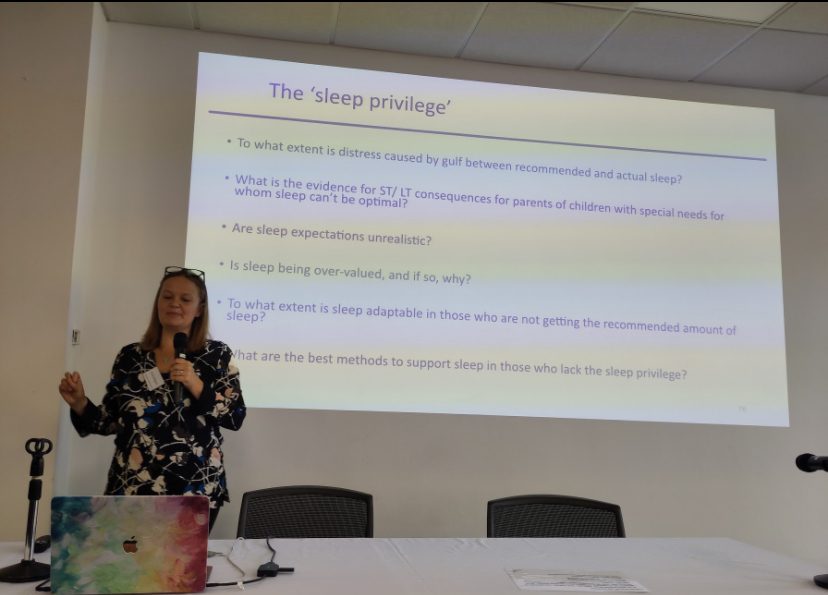
Sleep issues are over-represented and under-researched in the Down syndrome community. This gap is a driving motive for the DSSRN, and through this new research network, we hope to accelerate knowledge and effective interventions in this area.
The effect of broken sleep often weighs on parents and carers. This includes the health impact of poor sleep on family members with Down syndrome, but also the consequences of long-term interrupted sleep on caregivers themselves.
Prof Gregory has been involved in research with particular interest for caregivers. Her presentation at the DSSRN launch, “Type 1 diabetes as a prototypical condition challenging what we know about sleep”, opened up very interesting considerations about the pitfalls of an exaggerated focus and concern about quantifying and qualifying sleep.
Sleep is certainly more important for health and development than we have realised historically, but there are adaptive patterns that are even less understood, which may help compensate for some quantifiable sleep deficits.
This ability to adapt is also an under-researched area. Exploring this further will bring solid evidence that can help shape practice and guidance. This may be very good news for many people who simply cannot secure the ‘sleep privileges’ that others enjoy, and may ease some of the worries that come along with poor sleep.
We believe that this topic is just one of many areas that will benefit from the support of the DSSRN, bringing researchers together to change what we know about sleep in the DS community.
For further details on this topic, you can read a newly published editorial in the Journal for Child Psychology and Psychiatry, by Professor Alice Gregory et al, “Sleep privilege – research and clinical recommendations for when sleep cannot be optimal”.
World’s first research network focused on sleep issues and Down syndrome launched
Researchers from institutions across the UK gathered in London to foster cooperation in tackling sleep disorders that can profoundly affect health and development in the Down syndrome community.
The Down Syndrome and Sleep Research Network (DSSRN) was officially launched on Monday at the conference hall of the National Council for Voluntary Organisations, as an initiative to bring scientists together to concentrate on one of the highest priorities and most promising focal points for improving quality of life for people with Trisomy 21.
Sleep issues are common in people with DS, being detected up to ten times more than in typically developing peers. Researchers are keen to explore how improvements in sleep could positively impact development, cognition, chronic illnesses, and also longevity in a population whose life expectancy is at least 20 years lower than average.
Presenters included academics and researchers from University of Cambridge, Kingston University, Royal Holloway, Great Ormond Street and other institutions, presenting on their individual work and setbacks they have faced as researchers. A panel discussion with five interdisciplinary researchers generated a lively conversation on the challenges and opportunities in this area.
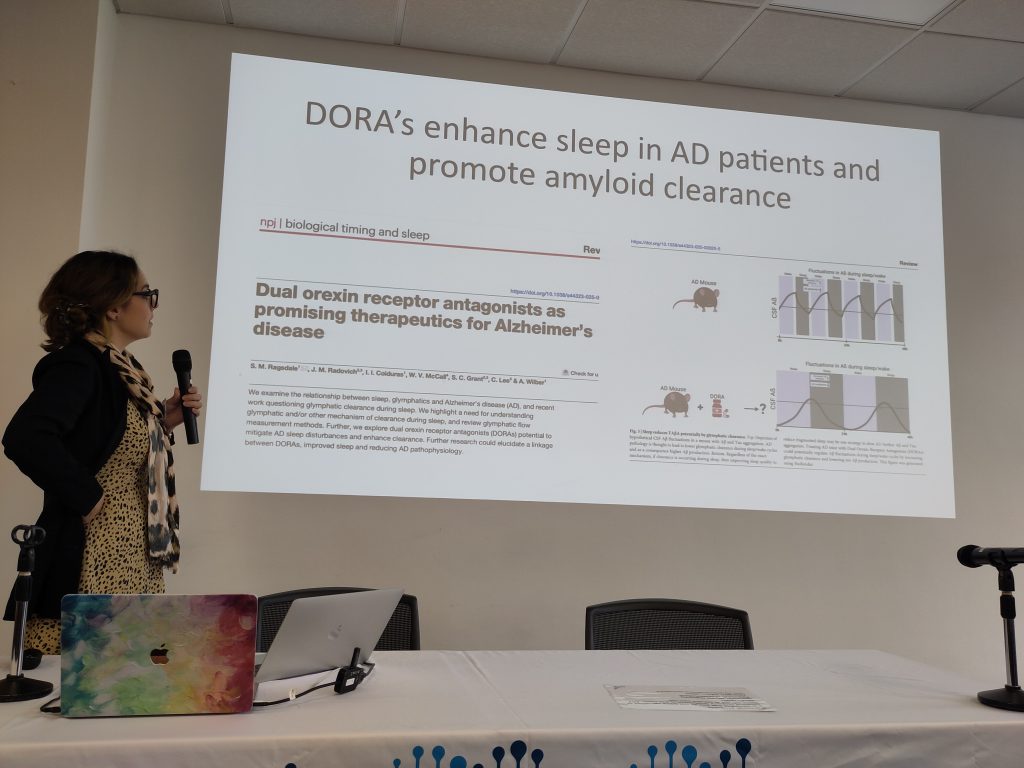
The role of sleep dysfunction in Down syndrome Alzheimer’s disease: Novel applied methodologies Dr Stephanie S. G. Brown Ph.D. – Senior Research Associate and Alzheimer’s Research UK Fellow, Department of Psychiatry, University of Cambridge
Keynote speaker Dr Lizzie Hill (Senior Lecturer in Sleep Physiology, University of the West of England (UWE Bristol) said “All of us in this room have heard something to the effect that ‘people with Down syndrome don’t sleep well’ or ‘it’s just part of the condition’, but that doesn’t mean we shouldn’t investigate and treat these as we would for anyone else.”
A poll of attendees on the day showed that 55% of attendees were currently involved in research, and 45% planning / would like to get involved, but experiencing barriers including lack of funding, lack of time and high workload, lack of research skills and knowledge, lack of support, bureaucracy and admin issues, ethics and regulatory processes, difficulty finding collaborators. Many of these issues were addressed on the day to explore ways forward.
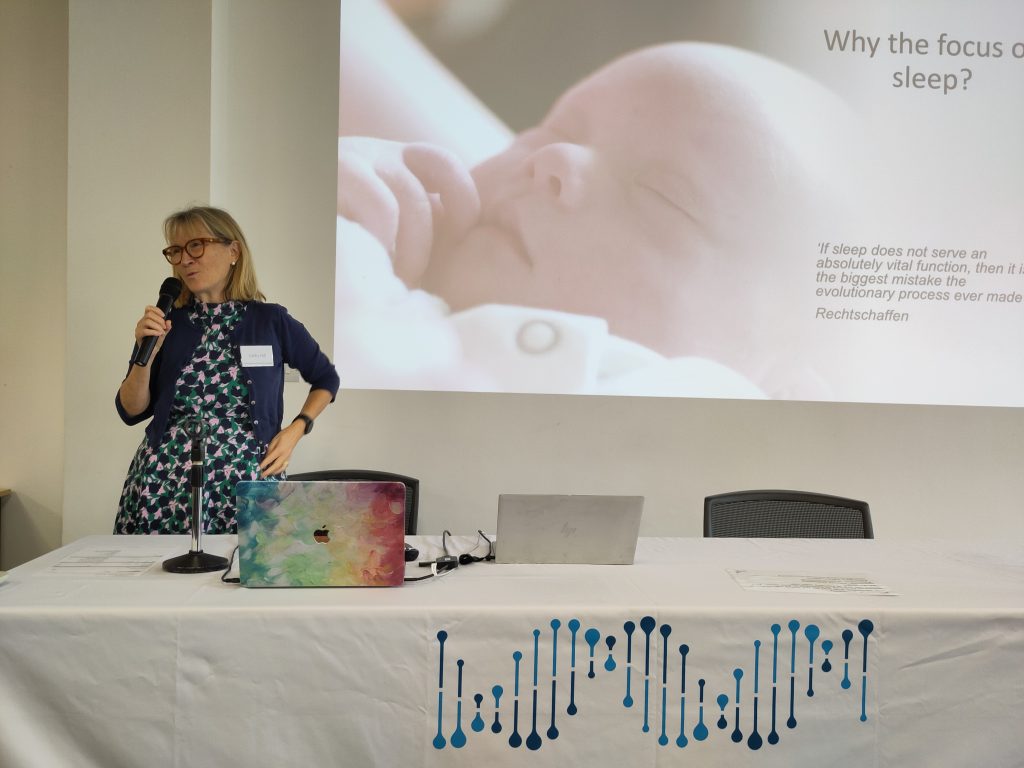
Prof Cathy Hill- BM MSc PhD FRCPCH – Professor of Paediatric Sleep Medicine – Southampton University
The DSSRN has secured funding for its startup year with generous grants from Hospital Saturday Fund, the Baily Thomas Charitable Trust, and the Sir Samuel Scott of Yews Trust, and the Launch Event was sponsored by Inspire Medical Systems and Idorsia. The DSSRN’s founding and launch have been coordinated by the Down Syndrome Research Foundation UK (DSRF UK), a charity promoting and funding medical research to improve the lives of people with Down syndrome since 1996.
DSRF UK’s Chair Dr. Elizabeth Corcoran said: “It has been a dream to bring these highly renowned researchers together to begin pooling their knowledge and expertise. We have great hope that with their combined insights, we’ll see breakthroughs in science in this area. This will yield new treatments that will give people with Down syndrome better sleep, from early childhood to adulthood, which will be a foundation for much healthier and longer lives.”
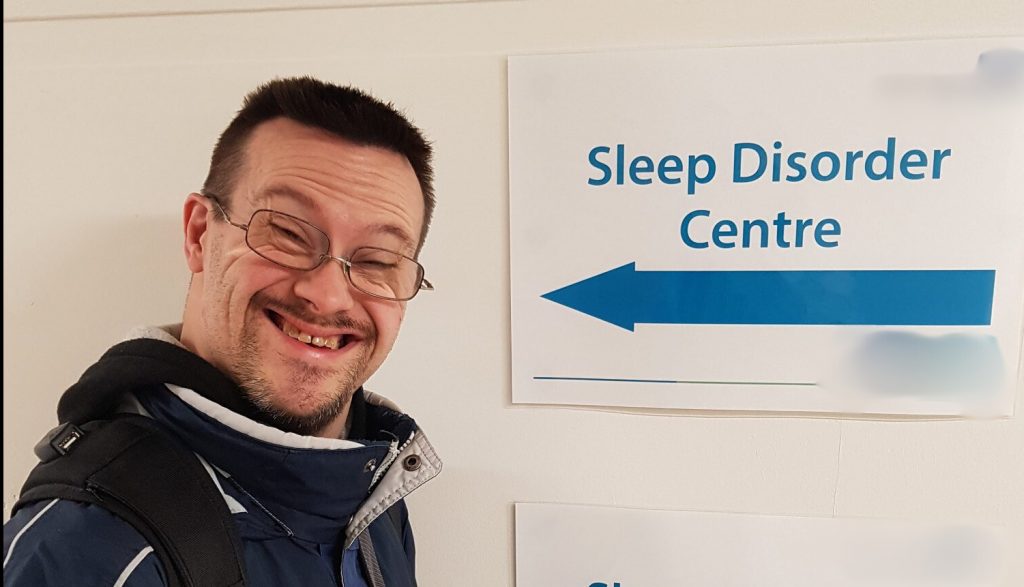
For more information, please see DSSRN’s website, and if you wish to stay in contact for updates, please fill out the form here: https://dssrn.org.uk/contact
Queries for the Down Syndrome and Sleep Research Network can be directed to: info@dssrn.org.uk
An open letter to MPs about the Assisted Dying Bill
from a parent in the DS Community
We have been encouraging people to write to their MPs about the Assisted Dying Bill before they vote on it for the final time, as it is quickly moving towards becoming law in the UK. The next debate at Report stage is due Friday 13th June. The 3rd reading vote is likely to be 20th June or even into early July.
When writing to your MP, your personal stories and insights matter more than you might know. A supporter who is a mother of a child with Down syndrome has shared this moving letter with us, which we are posting here. We hope it will inspire you to share your own story too with your own MP.

“Dear [Member of Parliament],
I am writing to you about the Terminally Ill Adults (End of Life) Bill introduced by MP Kim Leadbeater, and am asking urgently that you vote against this bill. I would like to share with you why it matters personally to me, and what worries me most about the direction we are headed in with this Bill.
When my daughter was born with Down Syndrome I was uncertain of what our lives would look like going forward. But I was certain that despite the surprise and adjustment of having a diagnosis at birth, it was better than having a prenatal diagnosis. Maybe I could have prepared better, or taken supplements proven to help babies with DS prenatally if I had known. But I also would have faced enormous pressure about the value of her life. The medical community proves over and over that it does not want people with Down Syndrome to live. A staggering percentage are not given a chance at life because they are aborted. The first thing expectant mothers are offered when they receive a prenatal diagnosis is an abortion.
This is a population of people that light up the world with their smiles, their joy, their kindness. Yet they had to beat the odds just to be born. But if they are lucky enough to be welcomed into their very lucky families, they are not welcomed so readily into society. I have to fight for my daughter to receive adequate medical care … there is nothing wrong with her, but the biochemistry of individuals with Down Syndrome is unique, and doctors often don’t want to take the time to research or educate themselves on the best care for this vulnerable population.
Now this precious group of people who actually survived past the womb despite persecution are facing the same persecution in adulthood. It is naive to believe that the very same medical community that is so reluctant to let them to be born wouldn’t be empowered by an assisted dying bill to do away with them when it’s convenient.
My little daughter is the heart and soul of our family … at two years old she has been fighting daily to make her milestones with the support and encouragement of her siblings. Her whole life she will have to work hard to keep up with her peers. But no one will surpass her in joy, in kindness, in generosity. But she should not have to fight at every stage of her life because of laws that make her vulnerable rather than protect her.
It is incredibly worrying that we are seeing a bill that doesn’t have any safeguards designed to protect people with Down Syndrome, and it doesn’t seem accidental. I am writing to ask you for the sake of many others like her, please do not give your support to this Bill. Please vote against it, because it will surely become another threat to the lives of people like my daughter.
Your sincerely,
Marie G.”
You can find out who your local MP is here:
https://members.parliament.uk/members/commons
Engagement with Terminally Ill Adults (End of Life) Bill
Kim Leadbeater’s Assisted Dying Bill is now headed towards the Third Reading in parliament. The Down Syndrome Research Foundation UK remains deeply concerned about the substance and the process of this bill.
DSRF-UK submitted written evidence to the Public Bill Committee in January 2025, outlining our reasons to believe that the Assisted Dying Bill will cause disturbing consequences for individuals with Down syndrome.
Along with many other groups, DSRF UK also co-signed an open letter issued by the National Down Syndrome Policy Group, asking for urgent attention on the issues raised by the Down syndrome community.
The Bill has recently passed through the committee stage, where a selected panel looked over the Bill and scrutinised amendments. 393 amendments were requested by MPs opposed to the Bill. Only 30 total amendments have been accepted, with a mere 7 of these changes being likely to increase the original safeguarding of the bill. The majority of the committee panel members with power to vote are holders of firmly established pro-euthanasia stances. It is unsurprising that issues with the Bill are hard to address.
We had hopes that one amendment would provide specific relevant protections. Amendment 368 aimed to provide additional safeguards for people with Down syndrome and prevent misuse of the Assisted Dying Bill, by invoking statutory guidance from the Down Syndrome Act 2022, which will soon be issued to meet the needs of adults with DS. This amendment was debated during the sixteenth sitting of the Public Bill Committee on 4 March 2025, and was rejected by the committee. Disturbingly, Kit Malthouse MP, co-sponsor of the Bill, followed the rejection of the amendment with a suggestion that criticism of the results of this vote should be silenced.
Kim Leadbeater made a public suggestion to meet with DSRF UK and NDSPG to discuss concerns, but no such meeting has taken place to date. This follows a wider repeated pattern of decision-making that excludes groups which advocate for the rights of people with disabilities.
We have highlighted data on concerns relevant to the DS community, in relation to assisted dying and euthanasia in other jurisdictions.
We have also found the research and oral evidence of Professor Tuffrey-Wijne, from Kingston University London, to be highly informative for this issue. Professor Tuffrey-Wijne is the world’s first Chair of Intellectual Disability and Palliative Care, and was a guest speaker at a recent discussion of the implications of the Bill with DSRF UK’s Chair, Dr. Liz Corcoran.
The Report Stage of the Bill is now scheduled for Friday 16th May 2025.
We are looking at an Assisted Dying Bill that does not provide adequate safeguards or address concerns for the Down syndrome community. In the lead up to the next stage of the Bill, DSRF UK will continue to publicise information relevant to our community, and signpost ways that you can make your voice heard.
Launch Event for the Down Syndrome and Sleep Research Network:
now open for registration to professionals
We are reaching out to researchers, healthcare professionals, sleep charities and DS-focused charities to invite you to the launch of our new research network. The full-day event will be held in London on Monday 9th June 2025.
This launch event has now opened for sign-ups from professionals and charity representatives.
We are proud to announce that this research network will be the first of its kind globally, concentrating on the specific connections and challenges linking Trisomy 21 and sleep disorders, and we hope it will be at the forefront of breakthroughs in this field. If your work brings you in contact with sleep disturbances and their impact on the Down syndrome community, we would love to get connected to you through this event, and give you access to more information on what the Research Network will offer. The launch day will involve learning, networking, and focus on research and advancements in the area of Sleep Disorders and Down syndrome.
Sleep problems among people with Down syndrome are very common, and deficits in sleep create profound repercussions for health and longevity. This research area has long been identified as crucial to focus on: but until now, it has not been given the attention needed. We invite you to come and see how your expertise and skills may help contribute to new advances in sleep science specific to the DS community. We encourage you to spread the word about the launch to colleagues and friends in related disciplines, if you can. The event is free, thanks to generous sponsors.
The day begins with an introduction to DSSRN’s mission and goals, followed by expert-led presentations covering the latest research and clinical insights. Professor Catherine Hill and Dr Lizzie Hill will provide a comprehensive overview of sleep issues across paediatric and adult populations. Dr Stephanie Brown from the University of Cambridge will explore cutting-edge imaging research that examines the role of sleep dysfunction in Alzheimer’s disease among individuals with Down syndrome, alongside insights into behavioural complexity in related conditions like Prader-Willi syndrome.
Sessions will also include an early case report on Inspire device upper airway stimulation from the team at Great Ormond Street Hospital, presented by Mr Liam Sutton. Prof Alice Gregory will be discussing sleep disturbances in type 1 diabetes as a model for broader understanding.
Thanks for your support in making this launch a success and helping it reach as many interested professionals as possible. It’s time to cooperate to bring about change through sleep research for the worldwide Down syndrome community.
How to register to attend the launch: Please get in touch with organisers at info@dssrn.org.uk to claim tickets and for more details on the event.

David Elliott and Dr Liz Corcoran, chair of the DSRF UK and sister.