
Procedural Anxiety in Children with Learning Disabilities
Many of us understand the anxiety that comes as a part of seeking healthcare for your child with special needs. Either in a planned setting such as an out patients appointment or during an urgent care situation, having to facilitate your child to have blood taken or other procedure can be stressful. This is commonly called ‘procedural anxiety’ by researchers and professionals and encompasses the fear, worry or distress related to any medical or surgical procedure. Procedural anxiety can even become a barrier to families accessing much needed healthcare. This is one of the barriers we hope to break down by the creation of the Going To Hospital book.
“but more needs to be done….”
We are aware that more needs to be done to support families and children facing procedural anxiety however. We are pleased to let you know that Lauren Collard, MSc Nursing Student at King’s College London, is trying to understand such situations more deeply and improve nursing practice in the future for children and families in these situations.

Lauren would like to learn more about your experiences to help them find out more about ways in which they can support parents of children with learning disabilities who go through procedural anxiety better. They ask that for you to take part you are over the age of 18, willing to talk about your experiences of caring for your child during an episode of procedural anxiety. The focus of this study is on parents experiences of supporting a child who become anxious of distressed during procedures.
Lauren told us: “We are focusing on interviewing parents because we believe in ‘family-centred care’, i.e. that parents are best placed to understand and communicate their child’s experience where they may not be able to express this themselves, and secondly, that we would like to know how best to support parents when they are in hospital with their child as evidence shows when parents are respected and supported the outcomes for their children are better (which sounds so obvious, but I’m sure plenty of parents can attest that this doesn’t always happen in practice). The goal is that this research can be shared with other nurses to really highlight parents roles in supporting children through traumatic experiences in children, and ways in which we can improve children’s services to utilise this.”
What will happen if I take part?
If you choose to take part in the project you will be asked to participate in a virtual interview which will be done over the telephone or via instant messenger, using an app of your choice (Whatsapp, Microsoft Teams, telephone). Participation will take place from your home, or any quiet, private location of your choosing and can be arranged for a time which is convenient for you. It will last approximately 45-60 minutes. As part of participation you will be asked to talk about your experience(s) of caring for your child with learning disabilities, during an episode(s) of procedural anxiety. You will be asked to describe what happened, and how this made you think and feel. An example of a question that you may be asked in the interview is “what has been your experience of caring for your child with a learning disability, whilst they are having procedural anxiety?” or “how did this experience make you feel”. You will also be asked some demographic questions, such as your age, gender, and the age and gender of your child. You are free not to answer any questions that you do not wish to, and you may take a break at any point.
If you would like to take part contact Lauren at lauren.a.collard@kcl.ac.uk
#NeuroRestart Report – People with neurological conditions have missed out on vital treatment and support
Today the Neurological Alliance launch the results of their recent survey of more than 1,600 people with neurological conditions, with over 7 in 10 respondents reporting delays to their medical appointments as a result of COVID-19. The Down’s Syndrome Research Foundation represent the issues facing those with DS to the Alliance. Many of the issues highlighted in our Covid-19 survey have also affected others with different conditions e.g. the effects of ‘shielding’ on healthcare and mental health.
The delays in appointments mean people with long-term neurological conditions could be missing out on the vital assessments and treatment that help them to stay well and keep mobile.
The results, along with the powerful first-hand testimony from people living with neurological conditions, show clearly the huge impact COVID-19 has had on neurological treatment, care and support.
1,672 peopleⁱ took part in the survey between 9 –20 June 2020. The charity found that:
-
72% of respondents reported having had their NHS appointments delayed – 4 in 10 people didn’t know when until.
-
Almost 4 in 10 people (39%) due to see a neurologist were not given a future date for their delayed appointment, leaving them in complete limbo.
-
19% of respondents felt lonely, 1 in 10 felt hopeless.
The survey also revealed that 49% of people had found the Government’s advice on shielding to be unclear, 31% had had difficulty accessing their normal food supplies and 23% had experienced difficulty in obtaining their regular medication.
Many neurologists, specialist nurses and allied health professionals have been redeployed during the COVID-19 pandemic. Because of this and the risk of infection, almost all routine face to face neurology appointments have been delayed or cancelled. For people with neurological conditions this may mean they do not have the same level of support to help prevent their emergency admission to hospital. Others are struggling to get the rehabilitation they need, which could leave their mobility and motor skills permanently affected.
For some people with a neurological condition, missing out on the right treatment at the right time can also have life-changing consequences. For example, advanced drug therapies for Parkinson’s only have a short window during which they can be effective, so some people could already have lost their opportunity to have a life-changing therapy. Certain Disease modifying treatments (DMTs) for multiple sclerosis (MS), which reduce relapses and slow the progression of the condition – in some cases delaying the need for a wheelchair- have also been delayed or cancelled in some NHS clinics.
Around 1 in 6 people now live with a neurological condition in Englandⁱⁱ. By the end of 2020 it is estimated that, even without a second spike in COVID-19, there could be around 225,000 people on the waiting list for neurology appointments and 58,000 on the waiting list for neurosurgery appointmentsⁱⁱⁱ. Without finding new and creative ways of working and additional capacity in neurology services, people with neurological conditions are bound to experience further, potentially life-changing, delays.
Georgina Carr, CEO of the Neurological Alliance, which represents more than 80 neurological organisations, said:
“While health and care professionals have done all they can to retain some contact with people with neurological conditions during this crisis, our survey clearly shows that people with suspected and confirmed neurological conditions are being left in complete limbo whilst frontline services have been diverted to treat COVID-19 patients. This just isn’t acceptable and means thousands of people are not getting the life-changing treatment and support they so desperately need.”
“People with neurological conditions must not be left in the dark any longer. We urge NHS England to set out its plans to ensure an immediate restart of services as soon as it is clinically safe to do so. They must apply the same leadership they have shown to restarting cancer and fertility services, to the restart of NHS neurology services.”
Dr Ralph Gregory, Consultant Neurologist and Trustee of the Neurological Alliance, said:
“My colleagues and I have seen the devastating impact this pandemic has had on both patients and NHS staff. Patients concerns about going into hospital, along with reduction in capacity in neurology services, means that many people with neurological conditions may not be getting the specialist support they need.”
Dr Elizabeth Corcoran, Chair of Down’s Syndrome Research Foundation UK and Member of the Alliance, said:
“Families have been shielding and living in a state of fear and uncertainty due to confusing and unclear instructions from the NHS about who should shield. For Down’s syndrome, a lack of research into immune health has meant it was assumed they are not at risk. Siblings may have also struggled as some parents have spent the much of the day caring for their medically fragile child’s needs.
The unforeseen consequences of the lock down on those with neurological conditions, their carers and family members are only beginning to be understood and services must have a robust plan to anticipate and respond to problems in a timely manner.”
You can read the report here.
A technical briefing on the survey is available here.
In light of the reports findings, more than 40 patient organisations have written to Sir Simon Stevens, Chief Executive of NHS England and NHS Improvement, urging him to set out plans to restart neurology services. You can read the letter here.

Table from the report
Ends
ⁱ Between 9 and 20 June 2020, the Neurological Alliance conducted a survey of 1672 people, who between them had 62 different neurological conditions, in addition to some people still awaiting a diagnosis.
ⁱⁱ Neurological Alliance (2019) Neuro Numbers
ⁱⁱⁱ Medbelle, NHS Waiting List Estimation Tool
UK Down syndrome and Covid-19 Survey
There is much fear and anxiety within the Down syndrome community as to how Covid-19 may affect our family members with Down syndrome. Downs Syndrome Research Foundation UK and Positive About Down Syndrome have collaborated to try to reach as many UK based families to collect data to establish some baseline findings:
How many people with DS in the UK have had a confirmed case of Covid19 and how many suspected?
How has it affected those people, what treatment did they require and how did they respond?
Is it possible many are not showing symptoms, much like neuro-typical children/adults?
This will provide us with an overview, with the potential to further investigate and share findings. We have a closed Facebook page that is strictly for those in the UK, who presently have a family member who has confirmed/suspected Covid19. Please only request to join if you fit this criteria. https://www.facebook.com/groups/212112863448994/
Who should complete this survey?
A parent/carer for EVERY person with Down syndrome resident in the UK to complete, please complete survey once only. We are interested to establish what underlying medical conditions, if any, the person has; what symptoms, if any, they have shown since the beginning of the year and what treatment they have received. As you may know, many people have had Covid-19 with little or no symptoms, so we will ask about all possible symptoms and situations that would have increased the chance of your family member having caught Covid-19.
Many thanks for your support,
Dr Liz Corcoran & Nicola Enoch
DSRF UK Positive About Down Syndrome
https://www.surveymonkey.co.uk/r/28TDZCN
—————————————————————————————–
T21 Research Society International Survey
“The T21 RS are collecting survey information to understand the risks and course of COVID-19 among people with Down syndrome (DS) for people around the world. You are invited to complete this survey about the person with DS for whom you provide care if they have tested positive or have/ have had symptoms of COVID-19. Completion of this survey is your choice.
Once you complete the survey, you can decide if you want to forward a new survey link to clinician who is caring for the affected person to get additional information. If you agree, an automated email will be sent to you and will explain the study to the doctor who cares for the person with DS. It will provide a link to a “Clinician Survey”. You just need to forward that email. Again, everything will remain anonymous.
Link to survey: https://redcap.emory.edu/surveys/?s=98DMP3CCN8
We aim to release results every 2 weeks starting from the week of 20th of April to ensure that the information can be available to families and clinicians as it becomes available.
Many thanks for your help with this,
T21 RS”
Dear Santa
Dear Santa,
I know I haven’t written to you in a while, I’m *cough* years old now so it does feel silly to put pen to paper after all these years but here goes.

You see I want things to be better for people with Down’s syndrome, not just in the UK, but all around the world. Over 20 years ago my father, Peter, set up a charity because, well frankly researchers weren’t taking his calls when he said he was ‘just a dad’ to my brother David. He and a handful of other parents decided research needed to become a priority for David and others with DS.
All those years later and we have come so far, but we need to go further. I am so aware that health issues in people with DS are used to scare new parents.
Santa you might wonder why does research matter, people with DS are perfect and wonderful people who deserve dignity and respect. You are 100% correct they are and do deserve all that and more, but unfortunately there are health issues that they have a higher chance of being diagnosed with and it’s likely linked to their extra chromosome.
And on top of this lots of people who are supposed to be checking and treating these issues just ignore them and call the struggles ‘normal for down’s syndrome’! Can you imagine them doing that to someone with any other condition?
What I really want this year is…
To reach more parents and doctors than ever before. To help them see why research is so vital and to support it however they can.
Help me find the words to awaken our community to fight for more.
To be able to fund ground breaking studies that we can use to demand better healthcare for David and everyone out there.
To improve basic access to healthcare and remove blocks like anxiety or fear.
I hope I’m not being too greedy Santa – you can keep the chocolate I asked for last week if so.
Heres a little pic of David and Mum this year-

David and his mum, Sylvia, a founding trustee
With affection,

Prenatal Screening and Down Syndrome – million-dollar ethics
Prenatal Screening and Down Syndrome – million-dollar ethics
The Nuffield Council on Bioethics, an independent think tank on bioethics, launched their report on the ethical issues of NIPT(non-invasive prenatal testing) in 2017. NIPT, a new more accurate way of screening for Down syndrome, is part of the genetic testing market, predicted to grow to a value of $22 billion by 2024.

NIPT raises many ethical difficulties, covered by Nuffield. However, the Down syndrome (DS) community did not agree with all of its conclusions. Sally Phillips, actor, comedian and mother of a young man with Down syndrome, made this clear in her response when she questioned the difference Nuffield had drawn between screening for sex and screening for Down syndrome. “For you we still fall the wrong side of the line… leaving DS in the significant medical conditions box you are saying that discrimination against their lives does not have the right to be protected against.”
However, the report did, at least, outline some of the issues to be resolved in order to have a more ethical roll-out of NIPT. Two years on, how far have we got?
NIPT is a groundbreaking technology that uses a sample of the mother’s blood, containing maternal and placental cells, to estimate the chance that the baby will have a genetic variation. It is already in wide use in the private sector, where companies in the UK are offering parents the chance to find out if their unborn baby has a higher chance of everything from Down syndrome to deafness.
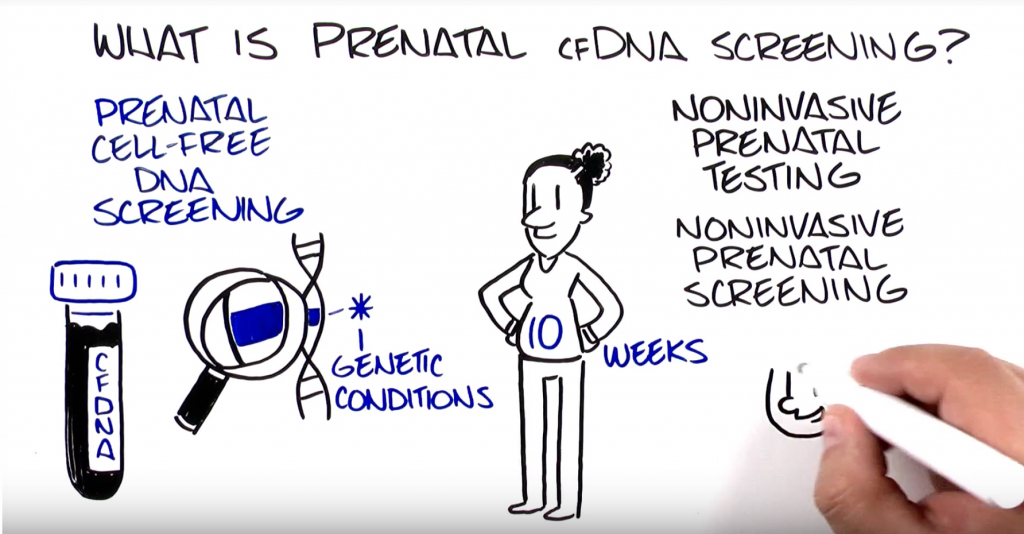
PRENATAL CELL-FREE DNA SCREENING (CFDNA SCREENING) VIDEO (GENETIC SUPPORT FOUNDATION)
Some US companies are offering prenatal genetic testing to sequence the whole genome of babies, whilst others have suggested that we will be able to use genetic testing (not specifically NIPT) to identify the chance of the embryo having a low IQ. Further, a patent has been issued for using genetic testing to analyse unborn babies for the chance that they may have autism.
Back in the UK, the National Screening Committee announced their approval of the use of NIPT in the NHS screening pathway in October 2016, on a Saturday, in the Guardian, without waiting for Nuffield’s final report. However, although roll-out of free NIPT tests in the NHS was planned for October 2018, it is not yet officially part of the screening pathway. The hold-up was legal rather than ethical and that may soon be resolved. However, so far most of the ethical issues raised by the Nuffield report have not been addressed. I cover four main ones below:
- There continues to be no national care pathway for women wishing to continue their pregnancy following a high chance or positive result from testing (20, Nuffield Report). Neither NICE nor the Royal College of Obstetricians and Gynaecologists (RCOG) have prioritised this in the last two years. What little guidance there is remains buried in RCOG guidelines entitled Termination of Pregnancy for Fetal Abnormality published in 2010. Nuffield strongly suggested that the name of this guidance should be changed immediately to reflect the inclusion of continuation of pregnancy guidance and that that section should be substantially expanded, or separate guidelines should be produced.
- Misinformation continues to abound around what NIPT is and what it can do (6.8, Nuffield report). NIPT is a more accurate screening test, but it is not a replacement for a diagnostic test such as amniocentesis or CVS. Further, tests are evaluated by different measures, the difference between these appears to continue to elude manufacturers, clinics, midwives, consultants and the media. Sensitivity measures what percentage, of all tested fetuses that have the variant, the test will find. Positive predictive value of a result is how likely your high chance result is to have correctly identified the baby as having Down syndrome. NIPT will pick up 99% of babies in some populations, although the bias of available studies has been questioned by the Warwick systematic reviewers. However, if you are a pregnant woman, interested in how likely your high chance result from NIPT is to be correct, then the positive predictive values range widely, starting about 46%, depending on your age and combined screening test results. There is a useful calculator here.
- Nuffield also recommended that private companies be regulated, and their advertising controlled by the Committee for Advertising Practice (6.39, Nuffield report). There are now CQC inspections, but it isn’t making much difference to the misleading information being given in the advertisements.
- Genetic counsellors remain few and far between, and despite Nuffield highlighting this as a need, (6.30, 6.36, Nuffield Report) little has been done. Some courses to train already stretched midwives have been offered, but this has hardly plugged the gap. ARC( Antenatal Results and Choices) are offered as a solution. However, they haven’t collaborated with Down syndrome charities, as was suggested, And, although, the Nuffield report found them to be non-directive, the following facts call the usefulness of their helpline into question:
- they were formally known as SAFTA, (Support After Termination for Abnormality);
- they have received donations from manufacturers of NIPT totalling £11,500 from 2014-2017;
- their booklets strongly orientate towards the difficulties of continuing your pregnancy and they offer no support groups for women continuing their pregnancy.
What is needed is an NHS helpline staffed by trained genetic counsellors to help patients process all the prenatal genetic information that is now available. This has been called for by the Down Syndrome Association. The need was also clearly demonstrated, by a case in the press recently, where a woman was given a high chance result from a private clinic for Turner syndrome, with all the associated worry and suggestions of invasive testing only to realise, after much research, that her result was approximately only 40% likely to be correct.

The front cover of the new version of the leaflet
Some things have been done. For example, heads of screening in each NHS Trust have received training and Public Health England have revamped their Screening for You and Your Baby booklets and produced template letters for issuing test results. However, these are still not being used everywhere, with one woman recently receiving a letter saying “We are pleased to inform you that the blood test….. shows you are at low risk for Down’s syndrome’. What would they say to her friend whose child does have Down syndrome – commiserations?!
In this landscape it is very hard to see how women can make truly informed choices. And anyway, genetics do not tell you who your baby will grow up to be. They could be a famous actress like Sarah Gordy, or a Special Olympics swimmer like Shauna Hogan. They may marry the love of their life, like Maryanne and Tommy Pilling, have more complex needs that mean they need full time care, or like the majority, be somewhere in between. Everyone, including those with Down syndrome, are, thankfully, far more than their genetics.
Where does this leave us?
The NHS used to be for healthcare, but it is now far wider ranging than that. The technology is moving apace, and the UK is aiming to be at the forefront of the genetic revolution. We need to decide what place we will allow ethics to play in the face of this multi-million-dollar industry. And if we will allow ourselves to listen to the quieter minority voices of those whose communities are already being impacted.
Blog reproduced with thanks to CMF blog and to author Colette Lloyd who is a speech and language therapist and mother to a young adult with Down Syndrome
Leading UK Neurodevelopmental and Mental Health Charities Launch The ‘Embracing Complexity Coalition’
Critical ‘Call to Action’ as new survey highlights seven out of ten people living with neurodevelopmental and mental health conditions have multiple conditions and a new ‘joined-up’ approach is needed
Back in March 2018 a group of charity heads, which included the Foundation’s chair Dr Corcoran, met together for the first time to discuss the issues facing a significant proportion of their communities. Many of the people we represent and support found themselves affected by more than one neurodevelopmental condition and encountering unique and challenging situations in healthcare, social care, research and employment. From that first meeting the beginnings of the Embracing Complexity Coalition was begun.
This week the Embracing Complexity Coalition officially launched at an event at the Houses of Parliament hosted by Dame Cheryl Gillan, MP, Chair of the APPG on Autism, Rt. Hon. Matt Hancock, Secretary of State for Health & Social Care and the Chair of the Embracing Complexity Coalition, Mr Jon Spiers, Chief Executive of Autistica.

Matt Hancock at Embracing Complexity Launch joined by Jon Spiers (Austistica) and Diane Wass.
- The Coalition is spearheading a movement to ‘work together’ to create a new approach for the future to better meet the complex needs of people with neurodevelopmental conditions (NDCs) and mental health conditions, who often have more than one condition.
- The Coalition is further calling for action to be taken to better meet the needs of people with NDCs and mental health conditions and prevent the poor outcomes and preventable deaths of the 6.6 million people living with NDCs as identified in the NHS Long Term Plan, helping them to live longer, healthier, and happier lives
- Pledge support for the call to ‘Embrace Complexity’ and drive change for people living with NDCs by visiting embracingcomplexity.org.uk and posting your own commitment online.
Secretary of State for Health and Social Care, Rt Hon. Matt Hancock opened the speeches by championing the huge value and diversity of thinking people with NDCs bring to society, the importance of tackling inequalities, and the critical importance of spearheading a new approach to supporting people with NDCs and mental health, as outlined in the NHS Long Term Plan.
Health Secretary Matt Hancock said, “Dyslexia is a distinction, not a drawback. I know first-hand the challenges it brings, but I know that with the right support dyslexia brings benefits too.
“I strongly believe that everyone has a valuable contribution to make to society, and I am absolutely determined to improve services for neurodiverse people to help each and everyone reach their full potential.”
“Through our Long Term Plan, backed by an extra £33.9 billion a year by 2024, we are transforming NHS services to tackle inequalities and provide high quality, safe and compassionate care.”
Neurodevelopmental conditions affect up to 10% of the population and include a wide range of conditions, from autism and attention deficit hyperactivity disorder through to epilepsy, OCD, dyspraxia, dyslexia, and many others. A report by the newly formed coalition, ‘Embracing Complexity: Towards New Approaches for Supporting People with Neurodevelopmental Conditions’ was also launched, including results from a survey distributed through 25 charities that specialise in neurodevelopmental and mental health conditions.
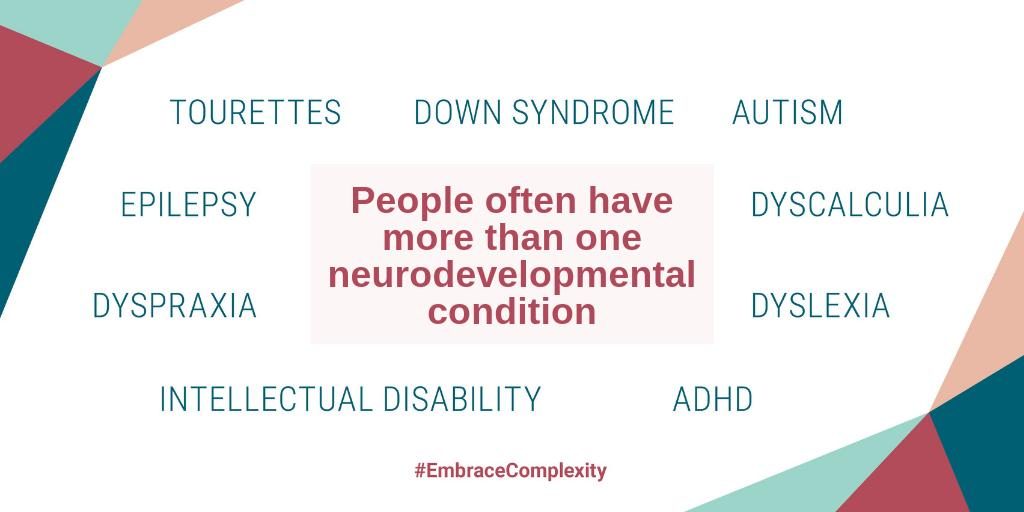
The survey showed seven out of ten people (67%) with neurodevelopmental conditions either had or believed they had more than one such condition. Furthermore, nine out of ten people living with NDCs asked for joint research into overlapping neurodevelopmental conditions, joint campaigning for better screening & diagnosis and joint campaigning for ‘joined-up services’. The survey also highlighted that over half of the people surveyed said they ‘do not feel accepted by society’ and ‘do not know where to go for help’.
‘Embracing Complexity Survey’-Key Findings
- The majority of people (58%) diagnosed said it was not easy to get a first diagnosis
- Difficulties Reported in Diagnosis (in both diagnosed and undiagnosed), included: long waiting times to see a specialist, being told children were too young to be considered, constant referrals to different healthcare or educational providers.
- Difficulties Reported in Diagnosis (in undiagnosed): 58% of people surveyed had tried to get a diagnosis but experienced many of the same issues as above, as well as experiencing dismissive attitudes, not knowing where to go for help, and feeling lost in the system. Nearly 8 out of 10 (77%) were not made aware of other possible diagnoses which might affect them, despite the evidence that shows strong associations between some NDCs.
- Nearly half (46%) of individuals were not offered information or support to help them understand how the condition could affect their life on diagnosis.
- 43% felt they could not access health services and 40% felt their additional support needs were not met to help them access health services.
- Nearly half (46%) of the 38% of survey participants that reported they were in contact with the social care system said their needs are generally not well supported by the social care system, with 58% feeling they were not well understood.
- Nearly half (46%) of the 25% of survey participants that reported they were in contact with the welfare system said their needs are generally not well supported by the welfare system, with 63% feeling they were not well understood.
- Almost a third (27%) of respondents in education said the education system is not supporting them well.
Jon Spiers, Chair of the Embracing Complexity Coalition and Chief Executive of Autistica, emphasised the need for a joined-up approach to work together more effectively and seek opportunities to accelerate impact:
“There is growing recognition that neurodevelopmental conditions, which have historically been approached through a single lens, often share symptoms. This finding was reinforced in the new Embracing Complexity Survey with over 500 people living with neurodevelopmental and mental health conditions. Most people affected have more than one neurodevelopmental condition and often many. Even when symptoms differ, there is a shared experience of challenges accessing services and the need for better support. There is no doubt joining up services is complex and will require new approaches, but people living with these challenges have to face complexity throughout their lives. We need to ensure diagnostic pathways take into account that people often have multiple conditions, ensure diagnosis waiting times are time limited and that services in every aspect of life take greater account of people with NDCs through better training, reasonable adjustments and proactive support. Greater investment in research to understand more about the lived experience of people with NDCs and how to deliver services that better meet their needs is critically needed.”
The Embracing Complexity Survey also highlighted the current substantial gaps and focus needed across the health, social care, and education services to tackle inequalities and enable people to reach their full potential.
Dr Corcoran of the Down’s Syndrome Research Foundation said “there is a great need to highlight the issue of diagnostic overshadowing and the impact it has in the proper diagnosis, education and welfare of people with neurodevelopmental conditions. In the Down’s syndrome community alone we frequently hear of medical and mental health conditions being ignored and misattributed to Down’s syndrome for months and even years. A multi-faceted and concerted effort must bring this to an end.”

Colette Lloyd (DS Oxford), Jon Spiers (Austistica), Nicola Enoch (Positive About Down’s Syndrome) and Dr Liz Corcoran (DSRF UK).
In keeping with the ethos of the report recommendations to drive a much-needed person-centred joined-up approach, the meeting highlighted the real need to deliver better outcomes for people with neurodevelopmental conditions and share work they are doing to achieve this. This is wholly in line with the NHS Long Term Plan, which commits to a wide range of actions to address the unmet needs of people living with NDCs and mental health conditions, and are supported by the Coalition, such as:
- Action will be taken to tackle the causes of morbidity and preventable deaths in people with a learning disability and autistic people
- The whole NHS will improve its understanding of the needs of people with learning disabilities and autism, and work together to improve their health and wellbeing
- Over the next three years, autism diagnosis will be included alongside work with children and young people’s mental health services to test and implement the most effective ways to reduce waiting times for specialist services
- Local providers will be able to take control of budgets to reduce avoidable admissions, enable shorter lengths of stay and end out of area placements. Where possible, people with a learning disability, autism or both will be enabled to have a personal health budget (PHBs)
- Increased investment in intensive, crisis and forensic community support will also enable more people to receive personalised care in the community, closer to home, and reduce preventable admissions to inpatient services
- Focus on improving the quality of inpatient care across the NHS and independent sector
- A commitment that funding for children and young people’s mental health services will grow faster than both overall NHS funding and total mental health spending, and a commitment to grow investment in adult mental health services faster than the NHS budget overall for each of the next five years
- Mental health support for children and young people will be embedded in schools and colleges
The event will close echoing the report’s ‘Call to Action’ – “It is critical we – government, civil servants, charities, research funders, public services and society – work together effectively and seek opportunities to accelerate a future where people with neurodevelopmental conditions and their families enjoy the same opportunities and experiences as the rest of society”.
What you can do to help
You can download the ‘Embracing Complexity: Towards New Approaches for Supporting People with Neurodevelopmental Conditions’ report on www.embracingcomplexity.org.uk . Make your own commitment by downloading the ‘Embrace Complexity’ board and posting a selfie on your preferred social media with your personal commitment. Please tweet to #EmbraceComplexity
*Who are the ‘Embracing Complexity Coalition’ Steering Committee?
The ‘Embracing Complexity Coalition’ is formed of leading neurodevelopmental and mental health UK charities including: ADHD Foundation, Afasic, Brain & Spine Foundation, British Dyslexia Association, Cerebra, Down Syndrome Research Foundation UK, Epilepsy Action, Epilepsy Research UK, Fragile X Society, I CAN, Mencap, McPin Foundation, MQ, The Neurological Alliance and Tourettes Action – chaired by Autistica.