
Research: Hearing tests easier for adults with learning disabilities
(watch the Facebook live here Monday 13th at 5pm UK time)
Lots of people with Down syndrome have a hearing loss.
The most commonly used hearing test, called Audiometry attempts to identify the quietest sounds that a person can hear at a range of frequencies in each ear. The standard version of this test involves presenting a sound and asking the person being tested to press a button when they hear the sound. The skills required by the person being tested are the ability to wait, and also the ability to respond in a consistent way on presentation of a sound.
Tests which remove both of these challenges are known as 2-Choice Audiometry. This form of assessment involves presenting sounds and directly asking the individual to make a choice between whether the sound was present or not. There is very limited data on the application of 2-Choice Audiometry in adults with Down syndrome.
The proposed study investigates whether 2-Choice Audiometry is feasible for adults with Down syndrome and gives consistent responses to sound.
Siobhan, from the research team, is looking for adults with Down syndrome who either have no hearing loss or have a mild hearing loss.
If you decide to take part, Siobhan would come to your home and test your hearing using the usual hearing test and also the 2-choice audiometry. The visit would take around 45 minutes.
There is more information about the study in easy read format here.
To find out more or to take part, please contact Siobhan…you’ll find her email below.
ABOUT THE RESEARCHERS
Siobhán Brennan
Siobhán Brennan is a clinical scientist and lecturer in audiology. Siobhán’s specialisms are auditory electrophysiology and audiological care for adults with a range of cognitive needs. Siobhán has had roles developing the quality of audiological care within the British Society of Audiology and the European Federation of Audiology Societies Working Group for Intellectual Disabilities.

Email Siobhán on skb41@kent.ac.uk
Mr Thanos Vostanis

Mr. Thanos Vostanis is a lecturer in intellectual and developmental disabilities, a qualified teacher (QTS), and a board-certified behaviour analyst (BCBA). Thanos is a member of various professional organisations such as Applied Behavior Analysis International, the UK-Society for Behaviour Analysis (UK-SBA), and the Standard Celeration Society (SCS).
Email Thanos on a.vostanis@kent.ac.uk
Social Cognitive Strengths and Difficulties in Down’s Syndrome
Lauren Jenner, who is a PHD student at the University of Surrey, is looking for children and young people who have Down’s syndrome (ages 4 to 17 years) ( both with and without a diagnosis of Autism Spectrum Condition (ASC) ) to take part in a study. Our chair, Dr Corcoran, had an informal chat with her about the project and why parents might like to be involved that you can watch here.
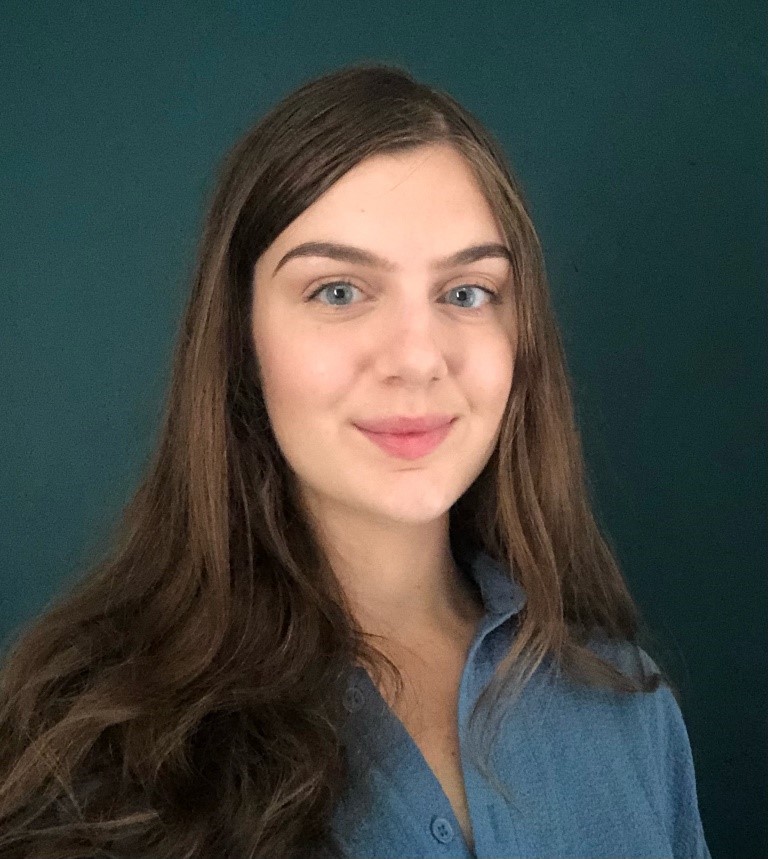
Lauren is researching how children and young people who have genetic syndromes process and understand social information. She aims to identify whether there are social processing differences characteristic of specific syndromes, and how these may relate to the presentation of autism traits.
People who have Down’s syndrome who take part in Lauren’s study will be asked to undertake:
- Some tasks and activities that demonstrate their social skills, verbal, and non-verbal abilities.
- Eye-tracking assessments which show the research team where a person is looking on a screen, giving them information about what that person finds interesting.
Parents will be asked to fill out some questionnaires and complete an interview over the phone.
Testing will be carried out remotely wherever possible. Remote testing sessions can be broken down into a number of short test sessions with rest breaks where needed. Overall, the whole study will take approximately 2-3 hours to complete. The research team will try and complete any face-to-face testing within one visit.
There is further information about the study here:
If you would like to take part in this study, have any questions or would like to discuss the study in more detail, please do not hesitate to contact Lauren using: l.jenner@surrey.ac.uk
BACKGROUND
Lauren and her colleagues are interested in how people who have Down’s syndrome process and understand social information such as faces, eyes and emotions. They would also like to know how social information processing relates to observable social behaviour skills that are central to navigating day to day interactions in people who have Down’s syndrome.
Since some people who have Down’s syndrome also meet the criteria for a diagnosis of ASC, Lauren is interested in whether individuals who have Down’s syndrome with and without ASC process social information in a way that is similar to or different from people who have ASC without a genetic syndrome. Lauren and colleagues hope that this work will lead to improved understanding of the social-cognitive strengths and challenges that are characteristic of individuals who have Down’s syndrome, those with other genetic syndromes associated with intellectual disability and people who have ASC with and without a genetic syndrome.
We asked Lauren how she believes her study may benefit people who have Down’s syndrome and their families:
‘Generating causal models that explain pathways contributing to variable risk for autism and phenotypic heterogeneity among individuals with Down syndrome will support greater precision in assessment and intervention that is informed by syndrome specific profiles.
‘Employing measures of social cognition which are accessible for those with intellectual impairment and/or limited language will support inclusion of individuals with Down syndrome in social cognitive research – addressing a current gap in the literature. Together, this research will advance understanding of autism in Down syndrome and help mitigate gaps in clinical services (Reilly et al., 2015, Thurm et al., 2019). Additionally, parents/caregivers can receive a personalised feedback report and/or a summary of the key findings from the study, which may be used to support their child (e.g., when seeking an autism assessment and diagnosis). There will be a clear statement at the top of each personalised feedback report highlighting the report is not a clinical report but results of a research study. Parents/caregivers are always advised to contact their GP or other appropriate professional if they wish to have clinical input.
‘In short, this work is imperative for understanding how individuals with Down syndrome process social information and whether this is related to the presentation of autism. It also will advance measurement of social cognition in this population. The ultimate key beneficiaries of the project will be individuals with Down syndrome, their families, and researchers investigating neurodevelopmental conditions.’
OTHER MEMBERS OF THE RESEARCH TEAM
 |
 |
| Dr Jo Moss is a researcher and lecturer at the University of Surrey. Through her research, Jo aims to further understand social, emotional and cognitive diversity in individuals with genetic syndromes. | Profesor Farran is a psychologist with expertise in children’s spatial abilities and how this relates to mathematics and science competence, and in understanding spatial learning difficulties in individuals with neurodevelopmental disorders. |
Dr Liam Fox MP introduces Down Syndrome Bill to Improve Life Outcomes
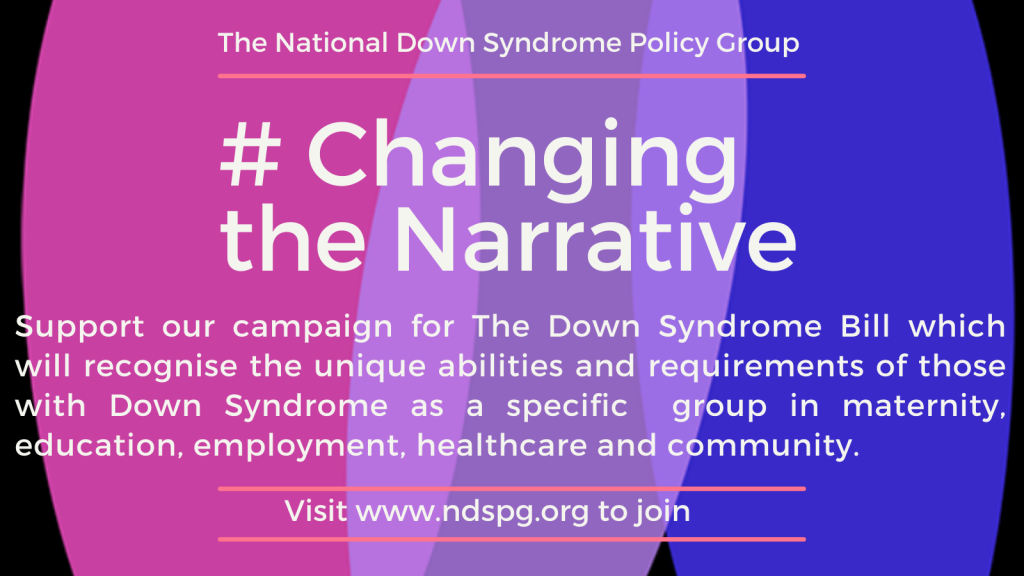
A Down Syndrome Bill is to be introduced to Westminster by Dr Liam Fox MP in the next Parliamentary session later this year. If successful, it will lead to the establishment of a Down Syndrome Act and a national strategy to improve provision and outcomes for all those living with Down syndrome in the UK. The Autism Act which became law in 2009 preceded the establishment of the national strategy to help meet the needs of adults with autistic spectrum conditions in England. The Down Syndrome Act will go further, identifying needs in all areas, for all individuals with Down syndrome across the whole of the UK. This will encompass, amongst other areas, maternity care, education, health, social care and employment.
The National Down Syndrome Policy Group, in coalition with the All-Party Parliamentary Group for Down Syndrome, has been lobbying for the long overdue Down Syndrome Act and have released a film featuring Founding Officers who have Down syndrome, highlighting some of the areas where they hope to see positive change in the future. Launch of The Down Syndrome Bill – YouTube
Dr Liam Fox MP, the Down Syndrome Bill Sponsor said,
“I am thrilled to bring forward a Bill to deal with the issues faced by those with Down syndrome. The full title is ‘A Bill to make provision about meeting the needs of persons with Down syndrome; to place a duty on local authorities to assess the likely social care needs of persons with Down syndrome and plan provision accordingly; and for connected purposes’.”
“My aim is to deal with three main areas. The first is to de-stigmatise Down syndrome and to re-educate both the public and professionals about the advances, including in life expectancy, that have occurred in recent decades. The second is to ensure that current provision of services is improved, whether provided by health, education or local services, by ensuring that providers give due consideration to those with Down syndrome when designing service provision. The third is to look ahead and deal with future issues, such as long-term care, in an era where, for the first time, many of those with Down syndrome will outlive their parents. By giving due thought to the issues today we can prevent avoidable human tragedies in the future.”
Actor and Founding Officer for the National Down Syndrome Policy Group (NDSPG) George Webster said:
“A Down Syndrome Act. Why didn’t we think of this before?!”
“We are all very excited that Dr Liam Fox is sponsoring a Bill with the aim of improving the lives of people living with Down syndrome.”
“I would like to see the Bill becoming law, then I think everyone like me with Down Syndrome will get better healthcare, more access to services and be more included in society. It is possible. It happens for some now, but it shouldn’t be a lottery. “
Peter Brackett, Chair of the NDSPG said:
“For too long the voice of the Down syndrome community has not been heard. We are delighted that the Down Syndrome Bill will enable engagement to secure and safeguard the rights and ambitions of the community across all aspects of society.”
“Having lobbied hard for this opportunity, our group will be fully behind Dr Liam Fox and the Down Syndrome Bill on its journey through Parliament, in line with our aim of raising the profile of issues affecting people with Down syndrome, their families and carers.”
Ends
- For more information, see the National Down Syndrome Policy Group website www.dspg.uk or email info@dspg.uk
- For media interviews with Dr Fox please contact David Goss David.goss@parliament.uk
- For interviews contact:-
-Ken & Rachael Ross MBE on 0771 0612 807 kenross@portsmouthdsa.org
-Lynn Murray on 0784 0966 736 or email lynn.murray@dspg.uk
-Peter Brackett on 0751 5121 733 peter.brackett@dspg.uk
- People with Down syndrome who are Founding Officers of the Down Syndrome Policy Group welcome the introduction of the Down Syndrome Bill: Launch of The Down Syndrome Bill – YouTube
- Line of Duty Star welcomes the launch of new APPG for Down syndrome https://www.heraldscotland.com/news/19295396.line-duty-star-tommy-jessop-backs-new-syndrome-all-party-parliamentary-group/
Down Syndrome Research Forum 2021
by Dr Eve Hirst
The Down Syndrome Research Forum 2021, hosted by Down Syndrome Education International was held online from 11th to the 12th March this year. The shift from face-to-face to online came, as most things this year, in response to the COVID-19 pandemic, but some notable benefits of an online conference came to light throughout the two days. The international feel of the conference was palpable with researchers from Russia, Norway, Canada, Germany and Ireland to name a few, as well as presenters from all over the UK. The audience reached even further with a total of 32 different countries represented among over 300 participants. The result was an opportunity to share ideas, research and creativity with a community stretching beyond the borders of geography and politics. Closer to home, many of us have struggled with isolation and loss over the past twelve months during three lockdowns in the UK. But the anticipation of normality and the age of technology in the wake of a devastating pandemic have brought with them hope and wisdom: that together we can learn and move forward; that obstacles can be overcome; that we need one another to thrive.
–
Wendy Uttley, from Down Syndrome Bradford, opened her presentation on the first day with a slide saying ‘Takiwatanga’-a Maori word for Autism meaning ‘in their own time or space’. COVID-19 has certainly given many of us time and space-and what have we learned?
Throughout the two days we heard innovative ways that education has been developed and delivered online throughout the pandemic. Early Intervention groups in Bradford have continued in a similar format over zoom with experience showing children have engaged better sitting up at tables during these sessions. Similarly, Positive About Down Syndrome teamed up with LETS Go! to provide video recordings for early years and online support groups for families in ‘The PEG’s Project’ with positive feedback: both children and parents benefitted from sharing experiences together and the social interaction the sessions brought. Teach Me Too also aimed to empower and encourage parents at home with children by developing video resources; parents reported a particular improvement in their children’s communication skills as a result. Parental support was an important discussion point throughout the day and a memorable highlight was hearing from Debbie Austin on her experiences with Positive Behaviour Support and how it has changed her family life after her beautiful daughter, Lucy, was diagnosed with Autism.
The second day of the conference was dedicated to Speech and Language Therapy (SALT) and we heard about various methods of promoting and encouraging language in children with Down Syndrome (DS). The mismatch of need for and availability of resources, especially SALT, was a recurring narrative, provoking parents and charities to creativity in order to deliver therapy.

The benefits of technology for both children and therapists were recognised through successful implementation of teletherapy and teamwork was hailed as an important factor when delivering online therapy to help overcome some of the challenges associated with working online.
PANTS4SCHOOL, an initiative developed by Positive About Down Syndrome to equip parents with the tools and knowledge to potty train, uses social media as its platform to educate and support a large number of users. Using online surveys, they have collected positive feedback and they continue to develop the programme.
Over the last 12 months of the pandemic, we have all been pushed to find new ways to connect with family and friends to maintain psychological and physical well-being. This has been particularly true for those that have been furloughed from work.
Many adults with DS in Ireland have benefitted from the ‘Ability Online’ course that was developed by Down Syndrome Ireland as a response to the pandemic to allow adults to establish new friendships and build on a range of skills via zoom. We heard how successful the course has been in increasing a sense of responsibility and independence in the group through friendships and social interaction available online. It was suggested that for some adults socialising via zoom or equivalent was preferable as it removed some of the intimidation experienced in face-to-face interaction; moving online enabled these challenges to be overcome in a comfortable environment they have some control over.

However, some caregiver concerns about technology use were highlighted during the conference too. These included worries about prolonged screen time; online vulnerability to harmful content; addictive aspects of gaming; obstacles to using technology. These are relevant concerns that need to be considered as technology and online content becomes more widely used.
Having not attended the research forum before, my take home message from the two days was one of optimism and achievement. This community has overcome some significant obstacles throughout the past year, using technology and initiative to develop new, pioneering ways to educate and disseminate the wealth of research and information that has been collected. We are continuing to see success with digital resources, at times beyond the progress of face-to-face interaction, paving the way for a new approach, keeping a holistic focus at the heart.
Despite this, I wonder how far technology can really take us. Can we really replace physical experiences with digital ones? I think perhaps not, but there is certainly potential.
Further topics covered throughout the conference included: education in schools; understanding and meeting the needs of children with a dual diagnosis of Autism and DS; service provision; hearing loss and a great deal more on speech and language. Delivered by a range of professionals, all incredibly inspiring work demonstrating how far we have come in understanding the needs of children and adults with Down Syndrome and how we can best support these needs. With technology on our side too, the future is indeed bright!
A huge thank you to the Down’s Syndrome Research Foundation UK for giving me the opportunity to attend the Research Forum online. It was certainly a privilege to hear the work that is being conducted internationally and gain a greater understanding into the gaps in our knowledge around Down Syndrome.
Happy World Down Syndrome Day to everyone for the 21st!!
—————
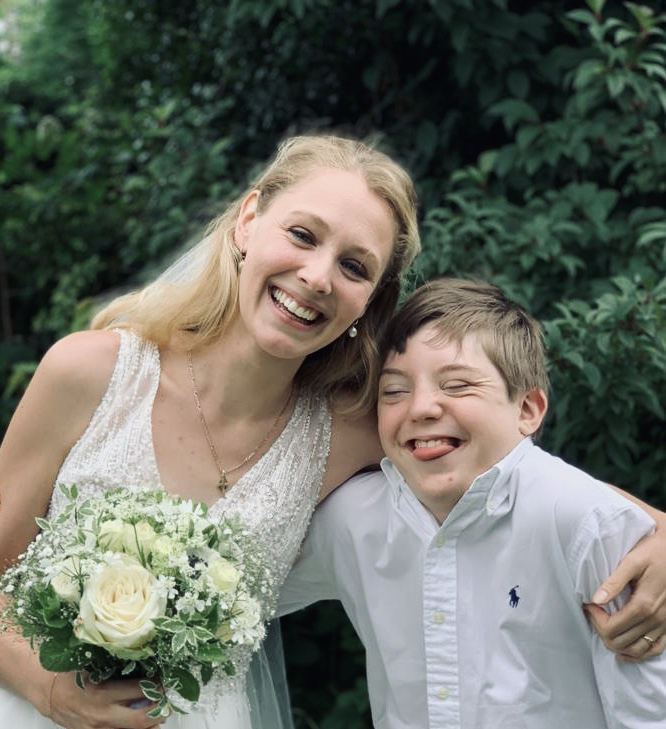
About Dr Eve Hirst
“My name is Eve and I’m a junior doctor currently working in A&E in the North West. I have two younger brothers with Down Syndrome who are the life and soul of the family!
I’m passionate about ensuring that services are as accessible as possible to people with disabilities and that medical care is not compromised by communication difficulties.
I have a particular interest in care of children with Down Syndrome in the first months and years of life, and support of parents during this time, so they can enjoy their beautiful new baby with as few health concerns as possible, confident in medical care and their own ability to manage their children’s needs.”
All Party Parliamentary Group (APPG) for Down syndrome
EXCITING ANNOUNCEMENT FOR OUR COMMUNITY
All Party Parliamentary Group (APPG) for Down syndrome being formed!
Over the past few years, a number of parent led organisations have been campaigning and lobbying in Parliament around issues, particularly in maternity care, that our community faces.
We discovered that there has not been an APPG for Down syndrome since 2015, so some of the groups have created an alliance to form an APPG. This will provide an opportunity for the views of people with Down syndrome and their families to be heard and addressed at Parliament. The APPG will give our community a platform to challenge some of the issues our families face and to raise awareness about living with Down syndrome in modern Britain.
An All Party Parliamentary Group (APPG) is a group of members from the House of Commons (Members of Parliament) and the House of Lords (Peers). It is all party because it has to have at least one member from the party in government (Conservative) and at least one from the main opposition party (Labour).
We have written to all Parliamentarians to invite them to join our APPG. It would be really powerful if as many people as possible could make contact with their local MP to request that they join our APPG on Down syndrome. Anybody who is allowed to vote can contact their MP and request they join – so we are asking people with Down syndrome to write and will be supplying an easy read version of this document together with a template. We hope that parents, siblings, grandparents, friends, professionals – anyone and everyone who is keen that the voices of people with Down syndrome are heard at Parliament will contact their MP.
We will be inviting people with Down syndrome to be involved with the APPG by participating in meetings and focus groups. If you have Down syndrome and are interested in being involved or have a family member with Down syndrome who is interested, please email dsappg@gmail.com
If you can add some of your own information in the first paragraph, it makes it more relevant and powerful. Please copy us into your email so we can record which MPs have been contacted. Email dsappg@gmail.com

APPG-For-Down-syndrome-easy-read
Dear (insert name of MP)
I am writing to you both as a member of your constituency and also proud parent/sibling/grandparent/teacher etc to (insert name) a (young person/child/adult) with Down syndrome. We would ask that you kindly consider joining the APPG for Down syndrome that is being formed to ensure the voices of those with Down syndrome including my (son/grandson/brother/student/friend etc) are heard at Parliament.
A coalition of national and regional groups have formed to act as the secretariat to the APPG.
The statement of purpose for the APPG is to campaign for equal access and provision to ensure equality and promote respect at all stages of life for people with Down syndrome.
Over recent years there have been huge advances in medical and educational development to enable people with Down syndrome to live full, rewarding and long lives, yet ironically whilst the future is looking so bright for our children and young people, outdated attitudes and legislation, discriminate against people with Down syndrome from the womb to the grave.
- In maternity services there is a blatant negative bias, with 69% of expectant women being offered a termination in the same conversation as being advised baby has Down syndrome.
- Termination to full term is permitted on the grounds of baby having Down syndrome. Women’s choices to continue are not supported with no care pathway and pressure to terminate – expectant women being told ‘it’s not too late’, at 36 weeks.
- In health care, the LeDeR report has cited that people with learning disabilities die on average 16 years younger than people without. It is estimated that 1,200 people with a learning disability die avoidably in the NHS each year.
- Employment opportunities are woefully inadequate, with only 6% of adults with a learning disability being in paid work.
- The annual research spending per person with Down syndrome to improve quality of life is currently in the region of £16.52, of which only £5.33 is towards treatment studies to test interventions.
People with Down syndrome deserve better and with your support we can ensure that their voices and views are represented to ensure equality for all.
I look forward to hearing favourably from you, should you require any further information please do not hesitate to contact me or the coalition by emailing dsappg@gmail.com
Yours sincerely
(insert your name)
NEW Pathway for Personalised Antenatal Care of Pregnancies Suspected or Diagnosed with Down’s Syndrome
Many within the Down syndrome community have for some time been concerned at the lack of a care pathway for those women expecting a baby with a high chance or confirmed result of having Down syndrome. Positive About Down Syndrome and the Downs Syndrome Research Foundation UK were invited to collaborate with St George’s University Hospitals, London to create such a document, which we are delighted has today been published.
The pathway is divided into six key areas:
- Antenatal Care – case-loaded by a named midwife or team for continuity of care
- Assessment for Fetal Structural Problems – to allow early care planning
- Assessment of the Risk of Prematurity -detection of polyhydramnios related to duodenal atresia
- Assessment of the Risk of Placental Dysfunction – detection of placental dysfunction will allow monitoring and timely scheduled birth
- Emotional and Psychological Support – use of unbiased language and attitudes and early access to psychological support (both formal and informal)
- Postnatal Considerations – opportunity to meet members of the neonatal team before the birth to discuss the postnatal plan of care
Dr Elizabeth Corcoran of the Foundation advises, “Absence of good practice pathways can mean poor and substandard care can flow into the gap. By leading the way with pathway we hope St George’s will be a beacon of antenatal care of women with pregnancies affected by Down syndrome.”
“We will ensure this pathway is shared to promote good practise and believe it will save lives.”
Nicola Enoch writes, “PADS provides online support to women with a high chance/confirmed result of baby having Down syndrome via DSUK PADS Great Expectations For Pregnant mums expecting LO w Down syndrome and it has concerned us how little support and information there is in some trusts around care of such pregnancies. We will ensure this pathway is shared to promote good practise and believe it will save lives.”
PADS and the Foundation thank St George’s University Hospitals NHS FT for acting upon the community’s concerns that pregnant women were not receiving care guided by the latest evidence or taking into account the poor care experiences.
We would ask that this pathway is shared to reach as many maternity units as possible.

Pathway document available here
REFERENCES USED IN PATHWAY
1. Muglu J et al. PLoS Med. 2019;16: e1002838.
2. Rasmussen SA et al. J Pediatr. 2006;148:806-812.
3. Skotko BG et al. Am J Med Genet A. 2009; 149:2361-7.
4. Sparks TN et al. Prenatal Diagn. 2016; 36:368-74.
5. Van Riper M and Choi H. Genetics in Medicine 2011; 13: 714 – 716.
Additional references of interest
Ivan, DL & Cromwell P.Clinical practice guidelines for management of children with Down syndrome: Part 1.Journal of Pediatric Health Care 2014; 28(1): 105 – 110.
Skotko BG, Capone GT, Kishnani PS; Down Syndrome Diagnosis Study Group. Postnatal diagnosis of Down syndrome: synthesis of the evidence on how best to deliver the news. Pediatrics. 2009;124(4).
Van Riper, M. A change of plans. American Journal of Nursing 2003; 103: 71 – 74.
Enoch N Sharing the News Report and UK Survey 2019
Phillips, C & Boyd, M. Relationship-based care for newborns with Down syndrome and endocardial cushion defect. Nursing for Women’s Health 2015; 19: 413 – 421.
Dual Diagnosis
#HoldsMeBack
After the recent news that adults with Down’s syndrome are to be advised to shield, our final blog, though by no means the least important, got moved back into November. The topic of dual diagnosis in Down’s syndrome (autism/ ADHD) is one that is close to our heart at the Foundation. Many will be aware our chair, Dr Corcoran, is also a psychiatrist and in her clinical work has seen the issues facing those with the most complex needs first hand. Poor provision of diagnostic services, educational setting failures, over medication, poor medical care and lack of research all affect those with dual diagnosis (DD) in a way that is more severe and leads to worse outcomes-including increased rates of death .
Trying to unpack why leads you down the rabbit hole: diagnostic overshadowing, prejudice, lack of training of professionals to support those with complex needs or specialist clinics and sadly poor funding to many arms of the system that is supposed to serve people with DD and their families i.e. learning disability services, mental health services, paediatrics, adult services and social services.
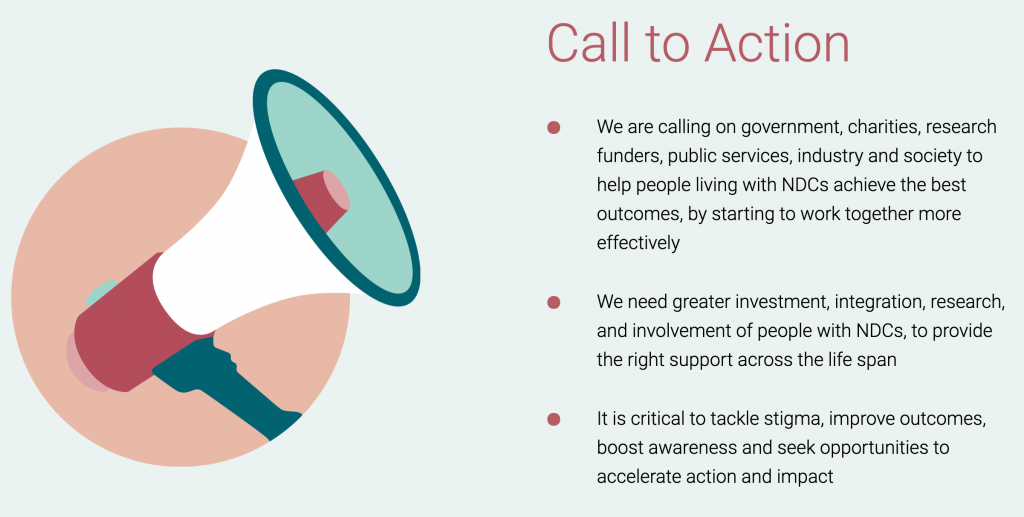
As we’ve seen there is a reluctance to see those with complex neurodevelopmental conditions (NCDs) as vulnerable and their families grow hoarse demanding better diagnosis and care. To this end we became one of the founding charities in the Embracing Complexity Coalition back in 2017, to come together to fight for better services and research to the most under served in our communities. Charities too have to come together and put aside their own agenda (and fundraising priorities) to put those they serve at the forefront.
How common is Dual Diagnosis in DS?
The rate of autism on our 2020 Covid-19 survey among 900 UK individuals with DS was 12.3%, higher than the last published UK paper of 7% (1) in 2007. ADHD was present in 3.4% of our survey sample fitting with previous estimates.
The Foundation will continue to make it priority to lobby for those who have been pushed to the fringes of multiple communities, not feeling a sense of belonging to any group. We will promote and fund research that is looking to make a difference in their lives and improve their lives in real concrete ways: fighting discrimination, better service provision and improved access to healthcare.
George’s Story
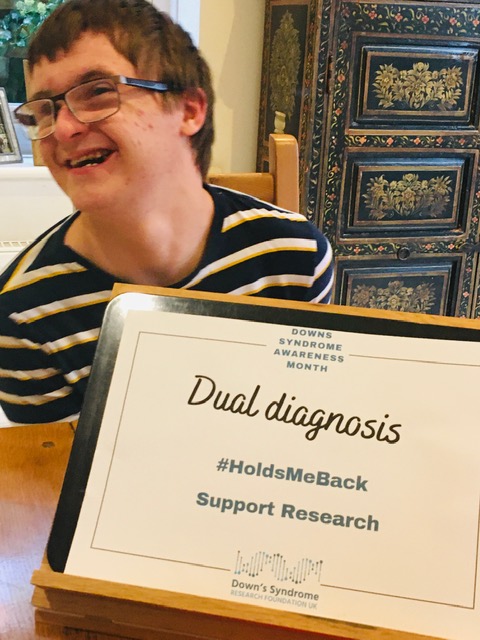
My son George is not “more Downs” than any other child. What he does have is a dual diagnosis of DS and Autism. This makes his learning disability very severe – that’s the truth! He has no words and is still in pads, has the odd seizure and severe oesophagitis. He makes loud repetitive monotone noises, zones out for hours, pulls my hair, pushes and pinches me and is very contrary. He needs help with absolutely everything. Everything.
My son is also amazing. And that’s the truth too. He looks into my eyes as if he can see my very soul – deep and penetrating, sending his love straight into my heart. He touches my face and my head while looking at me intently, focusing so hard on being gentle. He turns towards me at the most unexpected moments and throws his arms around my neck and smiles a beautiful, open, pure look of adoration, squealing with joy. He does the same to his dad and his sister. You don’t need words to say ‘I love you’. Oh and sometimes he even does what I say!
But he is neither completely in the Down’s syndrome camp nor the autism one. He has a unique set of challenges. He and his peers with dual diagnosis need to be part of the greater community and part of the research therein, to help them progress and live happy and fulfilled lives. This is my wish for him.
We need more research now.
Please consider supporting our work through a one-off or regular donation or by fundraising for us. We cannot wait, our community needs us.
Our deep thanks to Tatty and George for sharing their story.
Hypotonia
#HoldsMeBack
“Babies with Down’s Syndrome have low muscle tone (known as hypotonia) which is why it will take them a little longer to talk, walk and eat the same foods as others. They work extra hard, and they get there.”
It’s too easy for medical practitioners to attribute the delayed acquirement of various skills in those with Down’s syndrome to hypotonia. While they may mean well, we see it time and time again, where parents’ concerns are dismissed with this ‘catch all’ diagnosis – “it’s because he has hypotonia”. Do we ever stop to consider what hypotonia means? It is actually a very vague term, with no standard measurement and often becomes the default explanation for delayed motor development. There are many factors which affect ability to walk and if we do not adequately assess the reasons for slower motor development in individuals with Down’s Syndrome we cannot give individuals the targeted interventions they need. Walking should not be seen as an end in itself, rather ‘walking well’ should be the goal of any therapy because over compensating and adapting movement patterns can cause musculoskeletal problems further down the road.

The Foundation believes parents need to be better informed about how to enable their child to make progress so they can demand change. Beyond that the professionals need more research on the causes of mobility problems in Down’s syndrome and the most promising treatments. Our community has a history of challenging the status quo and we must not stop now because people with Down’s syndrome deserve better. Routinely attributing slower motor development to hypotonia is not good enough. A greater understanding of how individuals with Down’s syndrome move, more research into contributing factors and specific person-centred therapies would mean all people with Down’s syndrome are given every opportunity to develop safe and efficient movement throughout their life times.
Maxine & Rukai’s story
From Panacea to Progress: why we need research now
There’s an old joke whereby a musician walking down the street is asked by someone in need of directions: “how do you get to Carnegie Hall?” The musician replies: “practice, practice, practice!”
I don’t know anyone who’s ever learned anything, be it hang gliding, learning Italian, or playing the guitar, who has not had to rehearse over and over before excelling. Even tennis champion Andy Murray admits he is not a natural at the game and it’s only years of the strictest of repetition and studying past performance which have advanced his career so measurably.
And so, to my point: the joke about our well-rehearsed musician is indeed amusing. But the throwaway question we’ve heard all too often about my 8-year-old, pre-verbal son (“what if he doesn’t speak?”) is not. There is simply no “what if” if you haven’t exhausted all your options. And until you conduct extensive research into a problem area—in this case, mitigating the impact of hypotonia on oral-motor development—your options will never be exhausted. All your actions are half-hearted.
What holds my son back? Apathy. Stereotype.
Lack of research that creates deliverable, quality interventions.
Practice in anything creates new synaptic connections in the brain which enable actions to become reflex. It is well known that creating these synaptic connections takes far longer for people with Down’s syndrome, but, in the same way Andy Murray found a way to soar from having that ability to practice, from having the support systems and people who believed in him, there needs to be much more information gleaned from research to support people with Down’s syndrome in reaching their heights. There needs to be much more information created to support professionals in supporting an entire cohort of students not merely educable, but hungry for knowledge. My son is a sponge. Turn on the tap before it’s too late.
How do the Sarah Gordys and Pablo Pinedas, and Karen Gaffneys and Oliver Hellowells become so excellent at what they do? They practice.
If children with Down’s syndrome are meant to develop into adults who contribute to society and support a country’s economic success, then society needs to support them by providing the right interventions at the right time—underpinned by current, in-depth research.
“Any other approach is little more than a panacea, and ignores the true capability of human beings.”
Any other approach is little more than a panacea, and ignores the true capability of human beings.
Speech production is markedly different, but absolutely possible, for children with Down’s syndrome, and so little is known about how to support kids like my son.
We need more research now.
Please consider supporting our work through a one-off or regular donation or by fundraising for us. We cannot wait, our community needs us.
Professionals who would like to learn about what we currently understand about hypotonia in those with Down’s Syndrome DS Education have an excellent article here.
Our deep thanks to Maxine and Rukai Sinda Napal for sharing their story. You can follow them here.
To download a selfie poster:
#HoldsMeBack
Down’s Syndrome Awareness Month

Welcome to the start of another Down’s Syndrome Awareness month, this year our focus as a charity is the theme #HoldsMeBack. This year we want to do something different and invite the community to challenge some of the ideas we’ve held as ‘gospel truths’ about Down’s Syndrome for many years. With the passage of time, and medical research and advances, ideas that became untruths or less certain.
When we look at this lovely young man we can imagine what his parents were told when he was born. Language and terminology that now is considered derogatory or even hate speech. Limitations and expectations were taken as facts. Perhaps they were told “he might not walk/talk/learn” or “you need not bring him home”. Indeed to take a child with Down’s Syndrome home was counter cultural for many years.
In the past no one questioned the information they were passed and, like batons, these ideas were passed on to others through the years. As society decided they deserved the same rights as others; access to education and healthcare was slowly drip fed to each passing generation of people with Down’s Syndrome. So we saw that when offered the same stimulating environments, educational adjustments and basic healthcare we saw our community- as a whole- move forward.
I do not believe that the majority of the ‘professionals’ of the past held ill will against our community, they just saw things a certain way. Questioning it would have seemed ludicrous, these were the ‘facts’ about Down’s Syndrome.
What about now, in 2020? What immutable ‘facts’ will we see passed like batons this year? We want to ask you to think about ‘Why?’ these ‘facts’ might be so. When our mother in the 1900s was told “he will never read” was that he couldn’t or because her beautiful son needed speech and language therapy, glasses and basic education? Let’s begin by unpacking why myths seem to predominate the community (hint: lack of research will feature!).
There are many myths and misconceptions about people with Down’s Syndrome which can be attributed to a couple of factors:
Firstly, society’s understanding of Down’s Syndrome has not yet caught up with the real life experience of living with the condition today. Whilst many people with Down’s syndrome are more visible in our communities, there remains a stubborn reluctance to equally celebrate the life of those with the condition. Even within the Down’s syndrome community myths are perpetuated rather than challenged. We are rightly encouraged to love and accept people with Down’s syndrome but not to question how the condition holds them back.
“Even within the Down’s syndrome community myths are perpetuated rather than challenged.”
This leads us to our second point, that the lack of specific medical research means we are unable to challenge our healthcare professionals to provide targeted care that understands the medical needs of those with Down’s syndrome.
Over the coming weeks, to celebrate Down’s Syndrome Awareness Month, the Foundation will challenge the myths that often circulate during awareness campaigns. We believe acceptance of these myths, particularly from within the community, hinders the demand for research into areas which would specifically benefit those with Down’s syndrome. There are many advances that we can celebrate together but we must not take our eye off the ball and allow the general health of those with Down’s syndrome to plateau. We owe that to those have come before us, the trail blazers.
“What holds you back?”
For this year’s Down’s Syndrome Awareness Month we will be asking people with Down’s syndrome, their loved ones and carers “What holds you back?” It is right we ask people how their lives can be made healthier or what issues make life hard. At the Foundation we want all people with Down’s syndrome to thrive but we cannot achieve this if we do not acknowledge the very real problems that do exist.

“…just £5.33 per person with Down’s syndrome is spent on research that could directly benefit them”
Currently just £5.33 per person with Down’s syndrome is spent on research that could directly benefit them through interventions (per year)1. This compares with £228 for those with cancer, and £127 for those with dementia. We are committed to funding research that will improve medical, cognitive and mental health issues associated with Down’s syndrome, we cannot stand still and we need your help- to fundraise, donate and spread the word.
Do please tell us “What holds you back” by downloading our HoldsMeBackPoster poster (condition specific posters also below). Please send us a photo of you holding the sign and we will include it in our research awareness posts on social media and our blog.

David Elliott and Dr Liz Corcoran, chair of the DSRF UK and sister.
Banner image:
New York State Institute: a group of boys with Down’s syndrome, standing on some steps. Shuttleworth, G. E. 1842-1928. Date 1902