
Dr Liam Fox MP introduces Down Syndrome Bill to Improve Life Outcomes
A Down Syndrome Bill is to be introduced to Westminster by Dr Liam Fox MP in the next Parliamentary session later this year. If successful, it will lead to the establishment of a Down Syndrome Act and a national strategy to improve provision and outcomes for all those living with Down syndrome in the UK. The Autism Act which became law in 2009 preceded the establishment of the national strategy to help meet the needs of adults with autistic spectrum conditions in England. The Down Syndrome Act will go further, identifying needs in all areas, for all individuals with Down syndrome across the whole of the UK. This will encompass, amongst other areas, maternity care, education, health, social care and employment.
The National Down Syndrome Policy Group, in coalition with the All-Party Parliamentary Group for Down Syndrome, has been lobbying for the long overdue Down Syndrome Act and have released a film featuring Founding Officers who have Down syndrome, highlighting some of the areas where they hope to see positive change in the future. Launch of The Down Syndrome Bill – YouTube
Dr Liam Fox MP, the Down Syndrome Bill Sponsor said,
“I am thrilled to bring forward a Bill to deal with the issues faced by those with Down syndrome. The full title is ‘A Bill to make provision about meeting the needs of persons with Down syndrome; to place a duty on local authorities to assess the likely social care needs of persons with Down syndrome and plan provision accordingly; and for connected purposes’.”
“My aim is to deal with three main areas. The first is to de-stigmatise Down syndrome and to re-educate both the public and professionals about the advances, including in life expectancy, that have occurred in recent decades. The second is to ensure that current provision of services is improved, whether provided by health, education or local services, by ensuring that providers give due consideration to those with Down syndrome when designing service provision. The third is to look ahead and deal with future issues, such as long-term care, in an era where, for the first time, many of those with Down syndrome will outlive their parents. By giving due thought to the issues today we can prevent avoidable human tragedies in the future.”
Actor and Founding Officer for the National Down Syndrome Policy Group (NDSPG) George Webster said:
“A Down Syndrome Act. Why didn’t we think of this before?!”
“We are all very excited that Dr Liam Fox is sponsoring a Bill with the aim of improving the lives of people living with Down syndrome.”
“I would like to see the Bill becoming law, then I think everyone like me with Down Syndrome will get better healthcare, more access to services and be more included in society. It is possible. It happens for some now, but it shouldn’t be a lottery. “
Peter Brackett, Chair of the NDSPG said:
“For too long the voice of the Down syndrome community has not been heard. We are delighted that the Down Syndrome Bill will enable engagement to secure and safeguard the rights and ambitions of the community across all aspects of society.”
“Having lobbied hard for this opportunity, our group will be fully behind Dr Liam Fox and the Down Syndrome Bill on its journey through Parliament, in line with our aim of raising the profile of issues affecting people with Down syndrome, their families and carers.”
Ends
- For more information, see the National Down Syndrome Policy Group website www.dspg.uk or email info@dspg.uk
- For media interviews with Dr Fox please contact David Goss David.goss@parliament.uk
- For interviews contact:-
-Ken & Rachael Ross MBE on 0771 0612 807 kenross@portsmouthdsa.org
-Lynn Murray on 0784 0966 736 or email lynn.murray@dspg.uk
-Peter Brackett on 0751 5121 733 peter.brackett@dspg.uk
- People with Down syndrome who are Founding Officers of the Down Syndrome Policy Group welcome the introduction of the Down Syndrome Bill: Launch of The Down Syndrome Bill – YouTube
- Line of Duty Star welcomes the launch of new APPG for Down syndrome https://www.heraldscotland.com/news/19295396.line-duty-star-tommy-jessop-backs-new-syndrome-all-party-parliamentary-group/
Line of Duty star with Down syndrome backs launch of new Down syndrome All-Party Parliamentary Group at Westminster
BBC’s Line of Duty star Tommy Jessop is backing the launch of the new All-Party Parliamentary Group (APPG) on Down Syndrome, which will be launched at an inaugural meeting at Westminster Wednesday 12th May 2021.

Actor Tommy Jessop, star of Line of Duty
A number of Down syndrome advocacy and support groups along with a cross-party group of MPs, led by SNP MP Dr Lisa Cameron and Labour MP Matt Western, have come together to launch the new All-Party Parliamentary Group on Down Syndrome.
The new group has been launched to raise issues affecting people with Down syndrome and their families and carers, as well as to promote equality and respect at all stages of life, to campaign for equal access and support in all areas of life and to highlight the innate worth of people with Down syndrome and the contribution they make.
The first meeting will include a speech by advocates with Down syndrome welcoming the establishment of the group and highlighting the issues that the group will be seeking positive change on. These issues range from maternity care for parents expecting a baby with Down syndrome to the matter of premature death for people living with Down syndrome.

APPG members will be supported by the newly-formed Down Syndrome Policy Group in the Secretariat role. The policy group is comprised of interest groups and individuals who have Down syndrome, therefore linking the parliamentary group to others with knowledge of the issues important to the wider Down syndrome community.
Line of Duty actor Tommy Jessop said:
“I welcome the new All-Party Parliamentary Group for Down Syndrome. I hope this will raise awareness of people living with Down syndrome and who we really are so that we really do have a voice to speak up for ourselves and other people”.
“I want to see people with Down syndrome treated equally with others before and after they are born. We are the only group of people in the UK where people try to end our lives before we are born just because we have Down syndrome. This is not fair. It scars our lives and causes mental health problems”.
Self-advocate Heidi Crowter, from Coventry, said:
“We hope that the members of the All-Party Group can use their powers and their energy to help make positive change for people like me and my husband James who has Down syndrome”.

Activist and Trustee of DSPG, Heidi Crowter
Conservative MP Elliot Coburn, the group co-chair, said:
“I was delighted to be asked to join the new All-Party Parliamentary Group on Down Syndrome, and to become a Vice Chair. People with Down Syndrome deserve a strong voice in Parliament to stand up for them and their families, and to press for greater support to help with the child’s development and for the family”.

Government Minister Caroline Dinenage said:
“I’m so delighted to support the All-Party Parliamentary Group for Down Syndrome. Portsmouth DSA is such a source of support, strength and positivity for so many individuals and families across our region. I am all in favour of action to ensure people with Down syndrome lead healthy, active and independent lives – that their talents are recognised and their voices heard”.
Warwick and Leamington MP Matt Western said: “The launch of this APPG is a chance for those in public life to celebrate the contribution of those with Down syndrome to their local communities, to the lives of their families and to British society in its entirety.
“It is vital we as politicians listen to those with Down syndrome so we can ensure that, through our work in Parliament, nothing holds people back from fulfilling their potential. I am proud to be part of this new APPG and I pledge to give those with Down syndrome a voice in politics whenever I can.”
Nicola Enoch from the Down Syndrome Policy Group said:
“We are striving to ensure that people with Down syndrome will have the opportunity to have their voices heard at Parliament. For too long their views have not been canvassed or heard; the APPG will provide a public platform for people with Down syndrome to speak”.

ENDS
-
For more information, see the Down Syndrome Policy Group website www.dspg.uk or email info@dspg.uk
-
For interviews, contact Lynn Murray on 0784 0966 736 or email info@dspg.uk
-
People with Down syndrome who are trustees of the Down Syndrome Policy Group introduce themselves: https://www.youtube.com/watch?
v=-zL0naw24a0&ab_channel= DownSyndromePolicyGroup -
Sharing the News Report 2019 – The maternity experience of parents of a baby with Down syndrome https://downsyndromeuk.co.uk/
flipbook.html -
Birth incidence, deaths and hospitalisations of children and young people with Down syndrome https://bmjopen.bmj.com/
content/10/4/e033770 -
Life expectancy and causes of death of people living with Down syndrome http://www.sldo.ac.uk/our-
research/life-expectancy-and- mortality/life-expectancy-and- causes-of-death-of-people- with-down-syndrome/ -
Down syndrome abortion figures are expected to increase as NIPT is rolled out across NHS hospitals. The number of babies born with Down’s syndrome has dropped by 30% in NHS hospitals that have introduced the new test. https://www.thetimes.co.uk/
article/new-test-brings-big- fall-in-birth-downs-babies- c89krkjcx
Down Syndrome Research Forum 2021
by Dr Eve Hirst
The Down Syndrome Research Forum 2021, hosted by Down Syndrome Education International was held online from 11th to the 12th March this year. The shift from face-to-face to online came, as most things this year, in response to the COVID-19 pandemic, but some notable benefits of an online conference came to light throughout the two days. The international feel of the conference was palpable with researchers from Russia, Norway, Canada, Germany and Ireland to name a few, as well as presenters from all over the UK. The audience reached even further with a total of 32 different countries represented among over 300 participants. The result was an opportunity to share ideas, research and creativity with a community stretching beyond the borders of geography and politics. Closer to home, many of us have struggled with isolation and loss over the past twelve months during three lockdowns in the UK. But the anticipation of normality and the age of technology in the wake of a devastating pandemic have brought with them hope and wisdom: that together we can learn and move forward; that obstacles can be overcome; that we need one another to thrive.
–
Wendy Uttley, from Down Syndrome Bradford, opened her presentation on the first day with a slide saying ‘Takiwatanga’-a Maori word for Autism meaning ‘in their own time or space’. COVID-19 has certainly given many of us time and space-and what have we learned?
Throughout the two days we heard innovative ways that education has been developed and delivered online throughout the pandemic. Early Intervention groups in Bradford have continued in a similar format over zoom with experience showing children have engaged better sitting up at tables during these sessions. Similarly, Positive About Down Syndrome teamed up with LETS Go! to provide video recordings for early years and online support groups for families in ‘The PEG’s Project’ with positive feedback: both children and parents benefitted from sharing experiences together and the social interaction the sessions brought. Teach Me Too also aimed to empower and encourage parents at home with children by developing video resources; parents reported a particular improvement in their children’s communication skills as a result. Parental support was an important discussion point throughout the day and a memorable highlight was hearing from Debbie Austin on her experiences with Positive Behaviour Support and how it has changed her family life after her beautiful daughter, Lucy, was diagnosed with Autism.
The second day of the conference was dedicated to Speech and Language Therapy (SALT) and we heard about various methods of promoting and encouraging language in children with Down Syndrome (DS). The mismatch of need for and availability of resources, especially SALT, was a recurring narrative, provoking parents and charities to creativity in order to deliver therapy.

The benefits of technology for both children and therapists were recognised through successful implementation of teletherapy and teamwork was hailed as an important factor when delivering online therapy to help overcome some of the challenges associated with working online.
PANTS4SCHOOL, an initiative developed by Positive About Down Syndrome to equip parents with the tools and knowledge to potty train, uses social media as its platform to educate and support a large number of users. Using online surveys, they have collected positive feedback and they continue to develop the programme.
Over the last 12 months of the pandemic, we have all been pushed to find new ways to connect with family and friends to maintain psychological and physical well-being. This has been particularly true for those that have been furloughed from work.
Many adults with DS in Ireland have benefitted from the ‘Ability Online’ course that was developed by Down Syndrome Ireland as a response to the pandemic to allow adults to establish new friendships and build on a range of skills via zoom. We heard how successful the course has been in increasing a sense of responsibility and independence in the group through friendships and social interaction available online. It was suggested that for some adults socialising via zoom or equivalent was preferable as it removed some of the intimidation experienced in face-to-face interaction; moving online enabled these challenges to be overcome in a comfortable environment they have some control over.

However, some caregiver concerns about technology use were highlighted during the conference too. These included worries about prolonged screen time; online vulnerability to harmful content; addictive aspects of gaming; obstacles to using technology. These are relevant concerns that need to be considered as technology and online content becomes more widely used.
Having not attended the research forum before, my take home message from the two days was one of optimism and achievement. This community has overcome some significant obstacles throughout the past year, using technology and initiative to develop new, pioneering ways to educate and disseminate the wealth of research and information that has been collected. We are continuing to see success with digital resources, at times beyond the progress of face-to-face interaction, paving the way for a new approach, keeping a holistic focus at the heart.
Despite this, I wonder how far technology can really take us. Can we really replace physical experiences with digital ones? I think perhaps not, but there is certainly potential.
Further topics covered throughout the conference included: education in schools; understanding and meeting the needs of children with a dual diagnosis of Autism and DS; service provision; hearing loss and a great deal more on speech and language. Delivered by a range of professionals, all incredibly inspiring work demonstrating how far we have come in understanding the needs of children and adults with Down Syndrome and how we can best support these needs. With technology on our side too, the future is indeed bright!
A huge thank you to the Down’s Syndrome Research Foundation UK for giving me the opportunity to attend the Research Forum online. It was certainly a privilege to hear the work that is being conducted internationally and gain a greater understanding into the gaps in our knowledge around Down Syndrome.
Happy World Down Syndrome Day to everyone for the 21st!!
—————
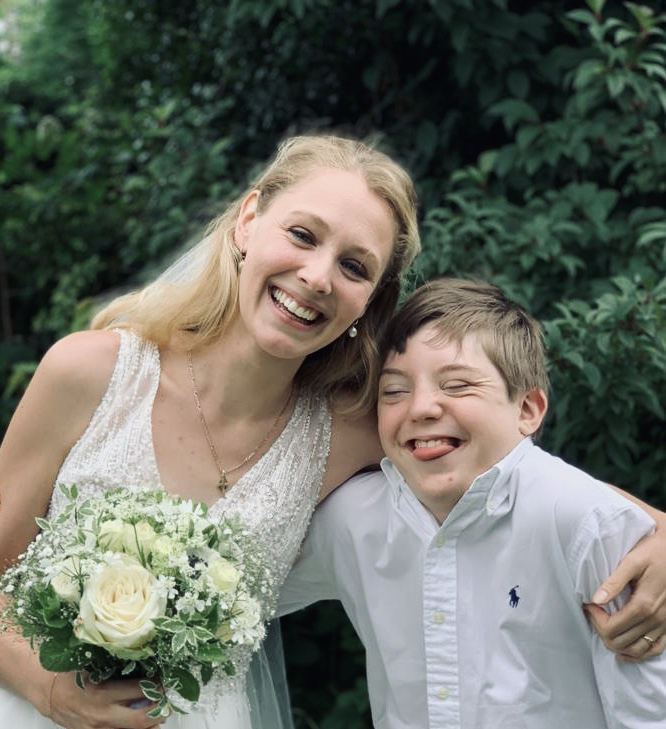
About Dr Eve Hirst
“My name is Eve and I’m a junior doctor currently working in A&E in the North West. I have two younger brothers with Down Syndrome who are the life and soul of the family!
I’m passionate about ensuring that services are as accessible as possible to people with disabilities and that medical care is not compromised by communication difficulties.
I have a particular interest in care of children with Down Syndrome in the first months and years of life, and support of parents during this time, so they can enjoy their beautiful new baby with as few health concerns as possible, confident in medical care and their own ability to manage their children’s needs.”
Dual Diagnosis
#HoldsMeBack
After the recent news that adults with Down’s syndrome are to be advised to shield, our final blog, though by no means the least important, got moved back into November. The topic of dual diagnosis in Down’s syndrome (autism/ ADHD) is one that is close to our heart at the Foundation. Many will be aware our chair, Dr Corcoran, is also a psychiatrist and in her clinical work has seen the issues facing those with the most complex needs first hand. Poor provision of diagnostic services, educational setting failures, over medication, poor medical care and lack of research all affect those with dual diagnosis (DD) in a way that is more severe and leads to worse outcomes-including increased rates of death .
Trying to unpack why leads you down the rabbit hole: diagnostic overshadowing, prejudice, lack of training of professionals to support those with complex needs or specialist clinics and sadly poor funding to many arms of the system that is supposed to serve people with DD and their families i.e. learning disability services, mental health services, paediatrics, adult services and social services.
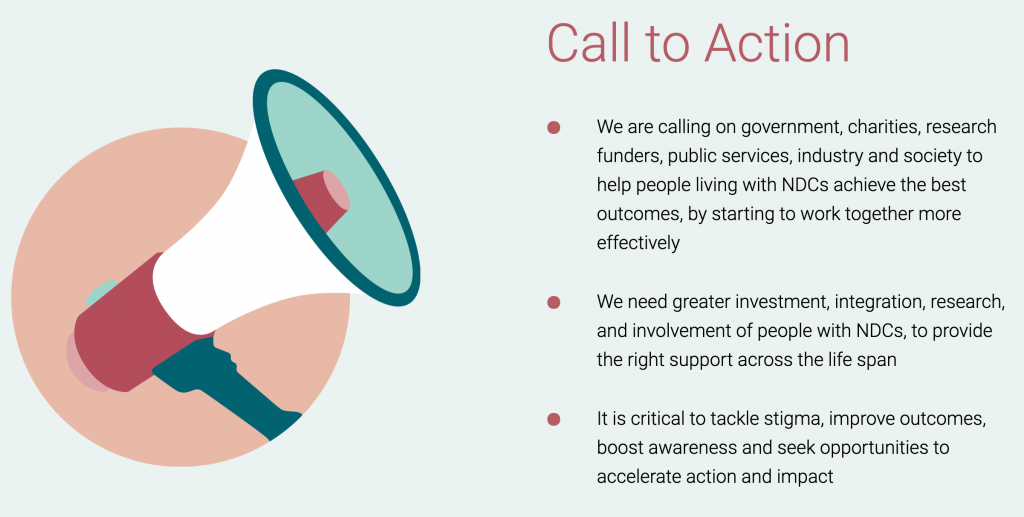
As we’ve seen there is a reluctance to see those with complex neurodevelopmental conditions (NCDs) as vulnerable and their families grow hoarse demanding better diagnosis and care. To this end we became one of the founding charities in the Embracing Complexity Coalition back in 2017, to come together to fight for better services and research to the most under served in our communities. Charities too have to come together and put aside their own agenda (and fundraising priorities) to put those they serve at the forefront.
How common is Dual Diagnosis in DS?
The rate of autism on our 2020 Covid-19 survey among 900 UK individuals with DS was 12.3%, higher than the last published UK paper of 7% (1) in 2007. ADHD was present in 3.4% of our survey sample fitting with previous estimates.
The Foundation will continue to make it priority to lobby for those who have been pushed to the fringes of multiple communities, not feeling a sense of belonging to any group. We will promote and fund research that is looking to make a difference in their lives and improve their lives in real concrete ways: fighting discrimination, better service provision and improved access to healthcare.
George’s Story
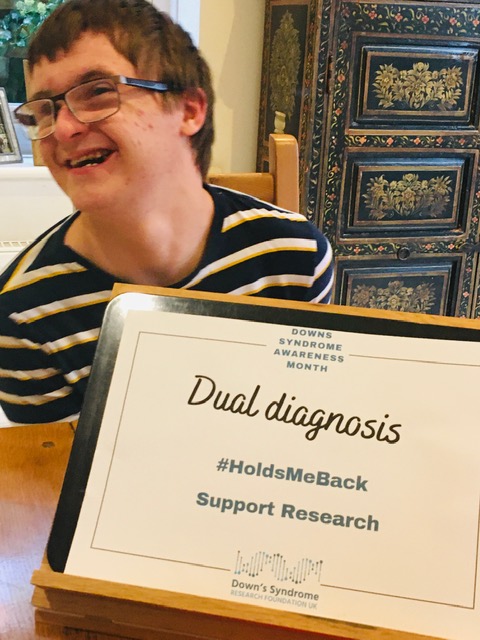
My son George is not “more Downs” than any other child. What he does have is a dual diagnosis of DS and Autism. This makes his learning disability very severe – that’s the truth! He has no words and is still in pads, has the odd seizure and severe oesophagitis. He makes loud repetitive monotone noises, zones out for hours, pulls my hair, pushes and pinches me and is very contrary. He needs help with absolutely everything. Everything.
My son is also amazing. And that’s the truth too. He looks into my eyes as if he can see my very soul – deep and penetrating, sending his love straight into my heart. He touches my face and my head while looking at me intently, focusing so hard on being gentle. He turns towards me at the most unexpected moments and throws his arms around my neck and smiles a beautiful, open, pure look of adoration, squealing with joy. He does the same to his dad and his sister. You don’t need words to say ‘I love you’. Oh and sometimes he even does what I say!
But he is neither completely in the Down’s syndrome camp nor the autism one. He has a unique set of challenges. He and his peers with dual diagnosis need to be part of the greater community and part of the research therein, to help them progress and live happy and fulfilled lives. This is my wish for him.
We need more research now.
Please consider supporting our work through a one-off or regular donation or by fundraising for us. We cannot wait, our community needs us.
Our deep thanks to Tatty and George for sharing their story.
#NeuroRestart Report – People with neurological conditions have missed out on vital treatment and support
Today the Neurological Alliance launch the results of their recent survey of more than 1,600 people with neurological conditions, with over 7 in 10 respondents reporting delays to their medical appointments as a result of COVID-19. The Down’s Syndrome Research Foundation represent the issues facing those with DS to the Alliance. Many of the issues highlighted in our Covid-19 survey have also affected others with different conditions e.g. the effects of ‘shielding’ on healthcare and mental health.
The delays in appointments mean people with long-term neurological conditions could be missing out on the vital assessments and treatment that help them to stay well and keep mobile.
The results, along with the powerful first-hand testimony from people living with neurological conditions, show clearly the huge impact COVID-19 has had on neurological treatment, care and support.
1,672 peopleⁱ took part in the survey between 9 –20 June 2020. The charity found that:
-
72% of respondents reported having had their NHS appointments delayed – 4 in 10 people didn’t know when until.
-
Almost 4 in 10 people (39%) due to see a neurologist were not given a future date for their delayed appointment, leaving them in complete limbo.
-
19% of respondents felt lonely, 1 in 10 felt hopeless.
The survey also revealed that 49% of people had found the Government’s advice on shielding to be unclear, 31% had had difficulty accessing their normal food supplies and 23% had experienced difficulty in obtaining their regular medication.
Many neurologists, specialist nurses and allied health professionals have been redeployed during the COVID-19 pandemic. Because of this and the risk of infection, almost all routine face to face neurology appointments have been delayed or cancelled. For people with neurological conditions this may mean they do not have the same level of support to help prevent their emergency admission to hospital. Others are struggling to get the rehabilitation they need, which could leave their mobility and motor skills permanently affected.
For some people with a neurological condition, missing out on the right treatment at the right time can also have life-changing consequences. For example, advanced drug therapies for Parkinson’s only have a short window during which they can be effective, so some people could already have lost their opportunity to have a life-changing therapy. Certain Disease modifying treatments (DMTs) for multiple sclerosis (MS), which reduce relapses and slow the progression of the condition – in some cases delaying the need for a wheelchair- have also been delayed or cancelled in some NHS clinics.
Around 1 in 6 people now live with a neurological condition in Englandⁱⁱ. By the end of 2020 it is estimated that, even without a second spike in COVID-19, there could be around 225,000 people on the waiting list for neurology appointments and 58,000 on the waiting list for neurosurgery appointmentsⁱⁱⁱ. Without finding new and creative ways of working and additional capacity in neurology services, people with neurological conditions are bound to experience further, potentially life-changing, delays.
Georgina Carr, CEO of the Neurological Alliance, which represents more than 80 neurological organisations, said:
“While health and care professionals have done all they can to retain some contact with people with neurological conditions during this crisis, our survey clearly shows that people with suspected and confirmed neurological conditions are being left in complete limbo whilst frontline services have been diverted to treat COVID-19 patients. This just isn’t acceptable and means thousands of people are not getting the life-changing treatment and support they so desperately need.”
“People with neurological conditions must not be left in the dark any longer. We urge NHS England to set out its plans to ensure an immediate restart of services as soon as it is clinically safe to do so. They must apply the same leadership they have shown to restarting cancer and fertility services, to the restart of NHS neurology services.”
Dr Ralph Gregory, Consultant Neurologist and Trustee of the Neurological Alliance, said:
“My colleagues and I have seen the devastating impact this pandemic has had on both patients and NHS staff. Patients concerns about going into hospital, along with reduction in capacity in neurology services, means that many people with neurological conditions may not be getting the specialist support they need.”
Dr Elizabeth Corcoran, Chair of Down’s Syndrome Research Foundation UK and Member of the Alliance, said:
“Families have been shielding and living in a state of fear and uncertainty due to confusing and unclear instructions from the NHS about who should shield. For Down’s syndrome, a lack of research into immune health has meant it was assumed they are not at risk. Siblings may have also struggled as some parents have spent the much of the day caring for their medically fragile child’s needs.
The unforeseen consequences of the lock down on those with neurological conditions, their carers and family members are only beginning to be understood and services must have a robust plan to anticipate and respond to problems in a timely manner.”
You can read the report here.
A technical briefing on the survey is available here.
In light of the reports findings, more than 40 patient organisations have written to Sir Simon Stevens, Chief Executive of NHS England and NHS Improvement, urging him to set out plans to restart neurology services. You can read the letter here.

Table from the report
Ends
ⁱ Between 9 and 20 June 2020, the Neurological Alliance conducted a survey of 1672 people, who between them had 62 different neurological conditions, in addition to some people still awaiting a diagnosis.
ⁱⁱ Neurological Alliance (2019) Neuro Numbers
ⁱⁱⁱ Medbelle, NHS Waiting List Estimation Tool
Going To Hospital book breaks down barriers
The Foundation are proud to support a new book in the “Looking Up…” series that will improve access to healthcare for all people with LD, including those with Down’s syndrome. Released this week by Royal Cornwall Hospitals Trust and Cornwall Down’s Syndrome Support Group – CDSSG with the support of the Foundation, MENCAP and Inclusive Teaching Matters.
Going to Hospital breaks down barriers in the access to healthcare by making the journey to and through healthcare clear and simplified. Each page representing a step in the journey. The use of photos, words and Makaton symbols helps the reader to see what their trip will be like and take the fear and uncertainty out of an already stressful time.
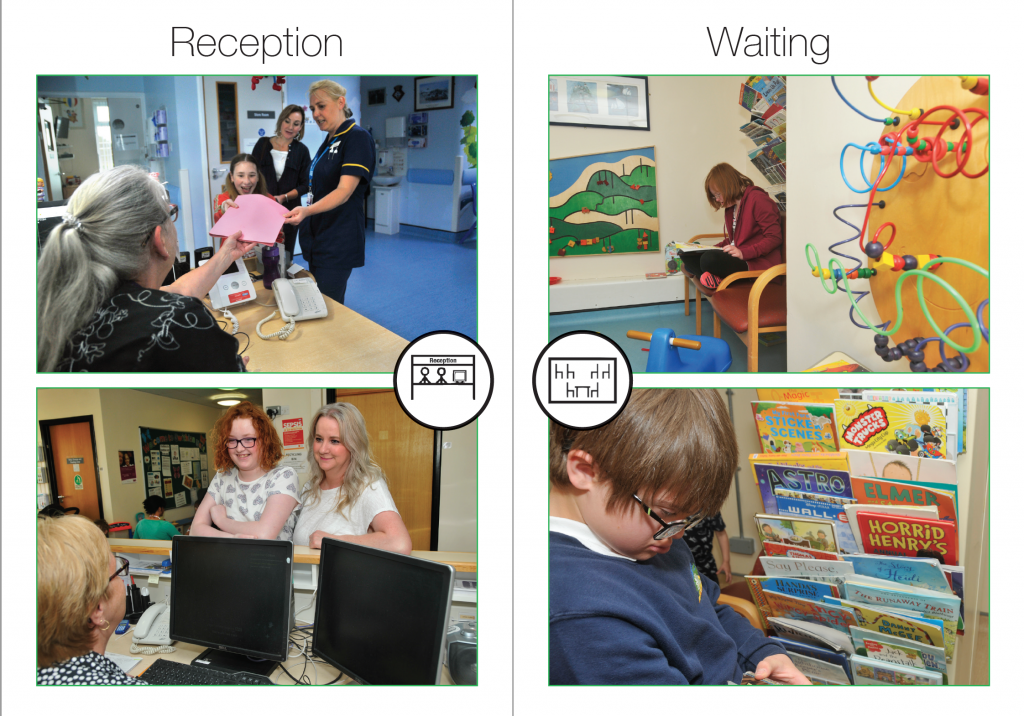
This initiative is the work of co-authors Jane Rees from the NHS Learning Disability Nursing & Safeguarding Team at RCH Treliske and Angie Emrys-Jones Publications Lead of Cornwall Down’s Syndrome Support Group. Angie and Jane are passionate about supporting children & young people to be heard in the clinical setting by removing as many barriers as possible to make the hospital experience less intimidating or overwhelming to those with learning disability and or autism.
The booklet is easy read, uses Makaton symbols throughout to support images and is now available in hard copy which will be sent out to patients known to the Learning Disability Team at RCHT ahead of appointments or hospital admissions. Amanda Glennon of Inclusive Teaching Matters has produced a 10-page pdf of all the Makaton signs and symbols used in the book as Healthcare Prompt Cards which will be freely available to
both patients and staff on the Makaton Charity Website shortly. It is intended that wards use the download to provide now & next boards with a timeline of treatment – medicine/operation/sleep/wake up/eat/drink/toilet/home etc therefore creating a visual timetable for patients who need more support to embed their understanding and manage expectations of procedures or admissions etc
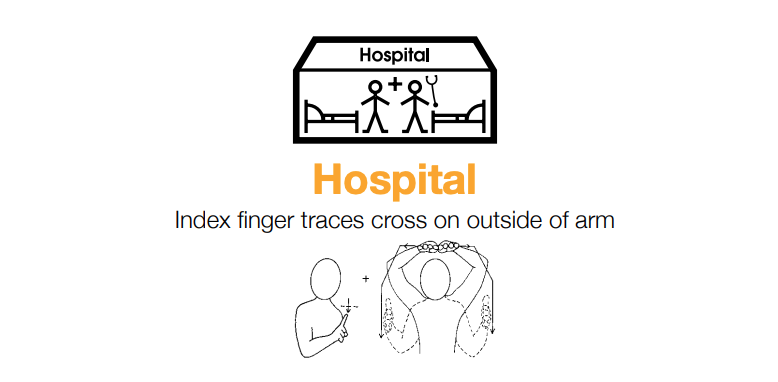
The Going To Hospital book is designed to be transferable to other trusts by enabling other hospitals to adapt and ‘tailor’ their own versions of the book and therefore being relatable in other areas of the UK. This will reach yet more people showing some of the procedures, equipment, and types of staff that children and young people with additional needs might see during their hospital visit.
The project has the support of Mencap’s national Treat Me Well campaign, the Downs Syndrome Research Foundation and also Paula McGowan’s #OliversCampaign following the preventable death of her son Oliver in 2016 due to poor care and inappropriate treatment. Oliver’s story, and others like his, are one of the main drivers for this project, we want to make sure the voices of our young people are heard in the clinical setting and that they are communicated with appropriately and are in control of their care as much as possible.
“It’s important that we are the healthiest we can be. This can sometimes mean that we need to go to hospital. Many people can feel frightened when they have to go to the hospital for lots of different reasons and that is perfectly normal. Lots of people find it difficult to explain exactly why they are so nervous. This fifth book in The Looking Up series is designed to help you to talk with your grown ups about why you are nervous and will help you to feel more confident to visit whichever department you need help from to be your healthiest self”
Paula McGowan, #Oliverscampaign
If you live in Cornwall and are not yet known to the Learning Disability Nursing Team at RCHT can request a copy directly for free and appointment letters will soon host a QR code of the book, meaning that it can be instantly downloaded directly onto a phone or device to be viewed at home.
Leading UK Neurodevelopmental and Mental Health Charities Launch The ‘Embracing Complexity Coalition’
Critical ‘Call to Action’ as new survey highlights seven out of ten people living with neurodevelopmental and mental health conditions have multiple conditions and a new ‘joined-up’ approach is needed
Back in March 2018 a group of charity heads, which included the Foundation’s chair Dr Corcoran, met together for the first time to discuss the issues facing a significant proportion of their communities. Many of the people we represent and support found themselves affected by more than one neurodevelopmental condition and encountering unique and challenging situations in healthcare, social care, research and employment. From that first meeting the beginnings of the Embracing Complexity Coalition was begun.
This week the Embracing Complexity Coalition officially launched at an event at the Houses of Parliament hosted by Dame Cheryl Gillan, MP, Chair of the APPG on Autism, Rt. Hon. Matt Hancock, Secretary of State for Health & Social Care and the Chair of the Embracing Complexity Coalition, Mr Jon Spiers, Chief Executive of Autistica.

Matt Hancock at Embracing Complexity Launch joined by Jon Spiers (Austistica) and Diane Wass.
- The Coalition is spearheading a movement to ‘work together’ to create a new approach for the future to better meet the complex needs of people with neurodevelopmental conditions (NDCs) and mental health conditions, who often have more than one condition.
- The Coalition is further calling for action to be taken to better meet the needs of people with NDCs and mental health conditions and prevent the poor outcomes and preventable deaths of the 6.6 million people living with NDCs as identified in the NHS Long Term Plan, helping them to live longer, healthier, and happier lives
- Pledge support for the call to ‘Embrace Complexity’ and drive change for people living with NDCs by visiting embracingcomplexity.org.uk and posting your own commitment online.
Secretary of State for Health and Social Care, Rt Hon. Matt Hancock opened the speeches by championing the huge value and diversity of thinking people with NDCs bring to society, the importance of tackling inequalities, and the critical importance of spearheading a new approach to supporting people with NDCs and mental health, as outlined in the NHS Long Term Plan.
Health Secretary Matt Hancock said, “Dyslexia is a distinction, not a drawback. I know first-hand the challenges it brings, but I know that with the right support dyslexia brings benefits too.
“I strongly believe that everyone has a valuable contribution to make to society, and I am absolutely determined to improve services for neurodiverse people to help each and everyone reach their full potential.”
“Through our Long Term Plan, backed by an extra £33.9 billion a year by 2024, we are transforming NHS services to tackle inequalities and provide high quality, safe and compassionate care.”
Neurodevelopmental conditions affect up to 10% of the population and include a wide range of conditions, from autism and attention deficit hyperactivity disorder through to epilepsy, OCD, dyspraxia, dyslexia, and many others. A report by the newly formed coalition, ‘Embracing Complexity: Towards New Approaches for Supporting People with Neurodevelopmental Conditions’ was also launched, including results from a survey distributed through 25 charities that specialise in neurodevelopmental and mental health conditions.
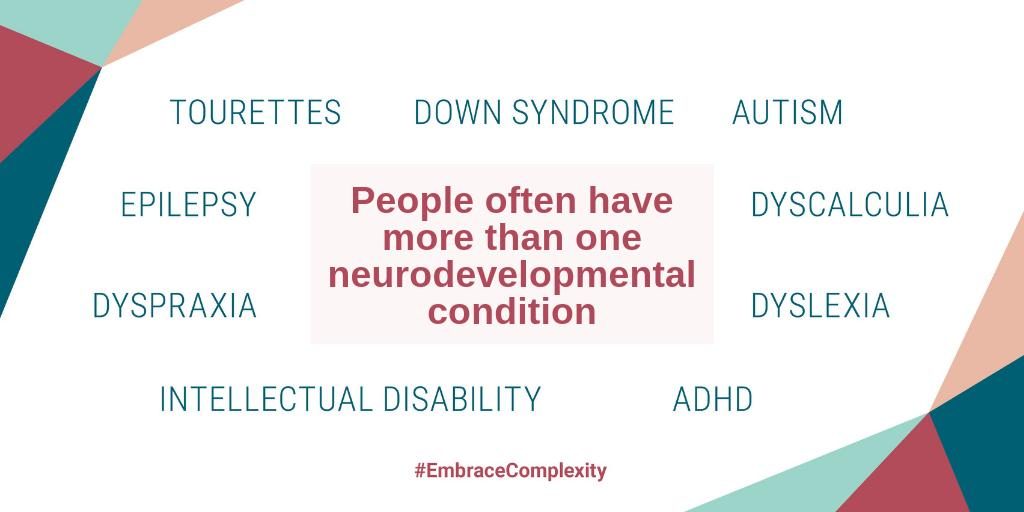
The survey showed seven out of ten people (67%) with neurodevelopmental conditions either had or believed they had more than one such condition. Furthermore, nine out of ten people living with NDCs asked for joint research into overlapping neurodevelopmental conditions, joint campaigning for better screening & diagnosis and joint campaigning for ‘joined-up services’. The survey also highlighted that over half of the people surveyed said they ‘do not feel accepted by society’ and ‘do not know where to go for help’.
‘Embracing Complexity Survey’-Key Findings
- The majority of people (58%) diagnosed said it was not easy to get a first diagnosis
- Difficulties Reported in Diagnosis (in both diagnosed and undiagnosed), included: long waiting times to see a specialist, being told children were too young to be considered, constant referrals to different healthcare or educational providers.
- Difficulties Reported in Diagnosis (in undiagnosed): 58% of people surveyed had tried to get a diagnosis but experienced many of the same issues as above, as well as experiencing dismissive attitudes, not knowing where to go for help, and feeling lost in the system. Nearly 8 out of 10 (77%) were not made aware of other possible diagnoses which might affect them, despite the evidence that shows strong associations between some NDCs.
- Nearly half (46%) of individuals were not offered information or support to help them understand how the condition could affect their life on diagnosis.
- 43% felt they could not access health services and 40% felt their additional support needs were not met to help them access health services.
- Nearly half (46%) of the 38% of survey participants that reported they were in contact with the social care system said their needs are generally not well supported by the social care system, with 58% feeling they were not well understood.
- Nearly half (46%) of the 25% of survey participants that reported they were in contact with the welfare system said their needs are generally not well supported by the welfare system, with 63% feeling they were not well understood.
- Almost a third (27%) of respondents in education said the education system is not supporting them well.
Jon Spiers, Chair of the Embracing Complexity Coalition and Chief Executive of Autistica, emphasised the need for a joined-up approach to work together more effectively and seek opportunities to accelerate impact:
“There is growing recognition that neurodevelopmental conditions, which have historically been approached through a single lens, often share symptoms. This finding was reinforced in the new Embracing Complexity Survey with over 500 people living with neurodevelopmental and mental health conditions. Most people affected have more than one neurodevelopmental condition and often many. Even when symptoms differ, there is a shared experience of challenges accessing services and the need for better support. There is no doubt joining up services is complex and will require new approaches, but people living with these challenges have to face complexity throughout their lives. We need to ensure diagnostic pathways take into account that people often have multiple conditions, ensure diagnosis waiting times are time limited and that services in every aspect of life take greater account of people with NDCs through better training, reasonable adjustments and proactive support. Greater investment in research to understand more about the lived experience of people with NDCs and how to deliver services that better meet their needs is critically needed.”
The Embracing Complexity Survey also highlighted the current substantial gaps and focus needed across the health, social care, and education services to tackle inequalities and enable people to reach their full potential.
Dr Corcoran of the Down’s Syndrome Research Foundation said “there is a great need to highlight the issue of diagnostic overshadowing and the impact it has in the proper diagnosis, education and welfare of people with neurodevelopmental conditions. In the Down’s syndrome community alone we frequently hear of medical and mental health conditions being ignored and misattributed to Down’s syndrome for months and even years. A multi-faceted and concerted effort must bring this to an end.”

Colette Lloyd (DS Oxford), Jon Spiers (Austistica), Nicola Enoch (Positive About Down’s Syndrome) and Dr Liz Corcoran (DSRF UK).
In keeping with the ethos of the report recommendations to drive a much-needed person-centred joined-up approach, the meeting highlighted the real need to deliver better outcomes for people with neurodevelopmental conditions and share work they are doing to achieve this. This is wholly in line with the NHS Long Term Plan, which commits to a wide range of actions to address the unmet needs of people living with NDCs and mental health conditions, and are supported by the Coalition, such as:
- Action will be taken to tackle the causes of morbidity and preventable deaths in people with a learning disability and autistic people
- The whole NHS will improve its understanding of the needs of people with learning disabilities and autism, and work together to improve their health and wellbeing
- Over the next three years, autism diagnosis will be included alongside work with children and young people’s mental health services to test and implement the most effective ways to reduce waiting times for specialist services
- Local providers will be able to take control of budgets to reduce avoidable admissions, enable shorter lengths of stay and end out of area placements. Where possible, people with a learning disability, autism or both will be enabled to have a personal health budget (PHBs)
- Increased investment in intensive, crisis and forensic community support will also enable more people to receive personalised care in the community, closer to home, and reduce preventable admissions to inpatient services
- Focus on improving the quality of inpatient care across the NHS and independent sector
- A commitment that funding for children and young people’s mental health services will grow faster than both overall NHS funding and total mental health spending, and a commitment to grow investment in adult mental health services faster than the NHS budget overall for each of the next five years
- Mental health support for children and young people will be embedded in schools and colleges
The event will close echoing the report’s ‘Call to Action’ – “It is critical we – government, civil servants, charities, research funders, public services and society – work together effectively and seek opportunities to accelerate a future where people with neurodevelopmental conditions and their families enjoy the same opportunities and experiences as the rest of society”.
What you can do to help
You can download the ‘Embracing Complexity: Towards New Approaches for Supporting People with Neurodevelopmental Conditions’ report on www.embracingcomplexity.org.uk . Make your own commitment by downloading the ‘Embrace Complexity’ board and posting a selfie on your preferred social media with your personal commitment. Please tweet to #EmbraceComplexity
*Who are the ‘Embracing Complexity Coalition’ Steering Committee?
The ‘Embracing Complexity Coalition’ is formed of leading neurodevelopmental and mental health UK charities including: ADHD Foundation, Afasic, Brain & Spine Foundation, British Dyslexia Association, Cerebra, Down Syndrome Research Foundation UK, Epilepsy Action, Epilepsy Research UK, Fragile X Society, I CAN, Mencap, McPin Foundation, MQ, The Neurological Alliance and Tourettes Action – chaired by Autistica.